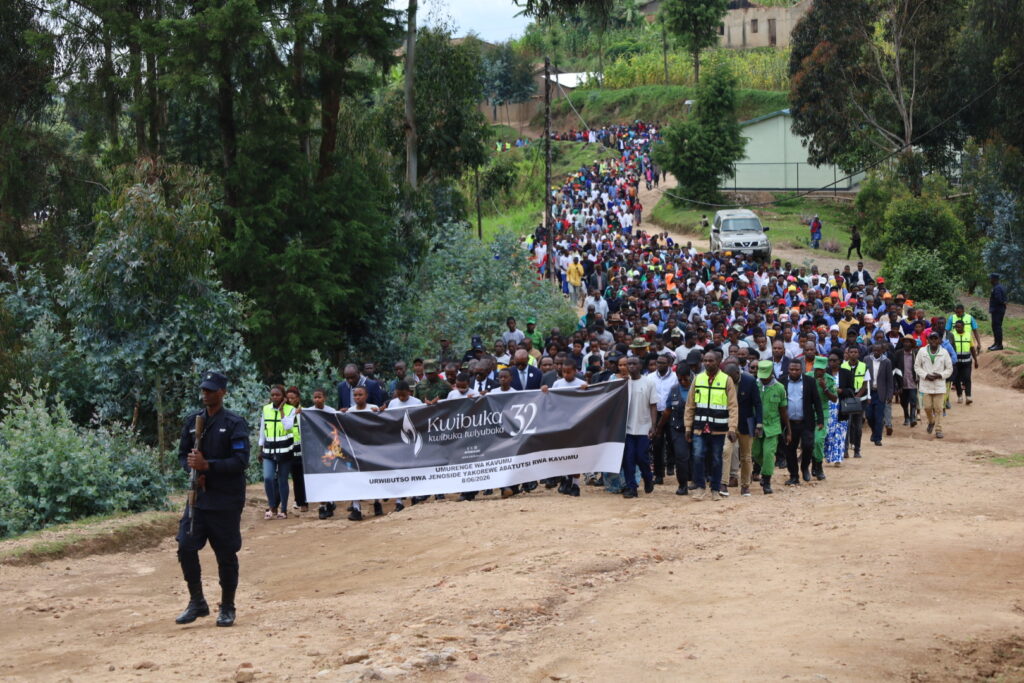
A commemoration marking 32 years since the 1994 Genocide against the Tutsi was held on Monday in Kavumu Sector, Ngororero District, in the area formerly known as Ramba Commune.
Historical accounts from the area indicate that on June 8, 1994, during the Genocide, 12 Tutsi children were thrown alive into a pit by their killers. They reportedly died after being left without food or water.
The commemoration took place at the Kavumu Genocide Memorial Site and was attended by residents, survivors’ families, and local leaders.
One of the survivors, Gaudence Mukasano, testified that violence in the area did not begin in 1994, but as early as 1990, when Tutsi civilians were already being targeted.
She recalled that June 8, 1994, marked one of the most horrific incidents, when children who had been separated from their mothers were gathered and thrown into a single pit, where they were buried alive. She also described cases in which children were reportedly forced to kill their peers under coercion.
Speaking at the event, Hon. Nyabyenda Damien said that many Tutsi in the former Ramba Commune were killed even before 1994, arguing that this history contradicts narratives that attribute the Genocide solely to the shooting down of President Juvénal Habyarimana’s plane.
He said killings in Kibirira, formerly part of Ramba, demonstrate that violence against Tutsi civilians began earlier, driven by a system of exclusion, hate, and genocidal ideology.
He commended the Rwanda Patriotic Army (RPA) Inkotanyi for stopping the Genocide and restoring peace, as well as the Government of National Unity for promoting unity and reconciliation.
He also urged young people to learn the true history of the Genocide, draw lessons from it, and actively reject genocide ideology and divisionism while embracing national unity.