Rwandans and Beninese have been urged to translate more than a decade of growing bilateral ties into concrete opportunities for trade, investment and economic cooperation.
Rwandan investors are being given an opportunity to participate in the initial public offering (IPO) of Dangote Petroleum Refinery, one of Africa’s largest oil refineries, as preparations for the share sale advance.
Gorilla tourism generated nearly $45.7 million, equivalent to more than Rwf65 billion, for Rwanda in the second quarter of 2026, accounting for a significant share of the country’s travel earnings.
Rwanda has been ranked 20th among 199 countries for the ease of entry for foreign visitors, according to the latest Henley Passport Index, highlighting the country’s relatively open visa policy as tourism continues to grow.
Rwanda has opened a new steel plant in Musanze with an annual production capacity of 250,000 tonnes, in a move expected to reduce the country’s dependence on imported steel and strengthen local manufacturing.
Rwanda’s annual consumer price inflation accelerated to 15.9% in August 2026, up from 13.8% in July, as the cost of food, transport, housing and energy continued to rise, according to the National Institute of Statistics of Rwanda (NISR).
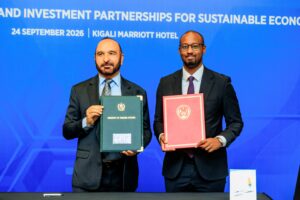
Rwanda and Oman have signed eight agreements aimed at expanding bilateral cooperation, with trade, investment and economic development at the centre of the new commitments.
The Northern Corridor is turning to truck drivers as part of efforts to reduce greenhouse gas emissions from road freight transport in Rwanda, with training focused on fuel-efficient driving and environmentally friendly practices.
The Rwanda Social Security Board (RSSB) has completed the acquisition of BK General Insurance Ltd from BK Group Plc for Rwf31.7 billion, giving the social security fund full ownership of the insurer and paving the way for the consolidation of Rwanda’s insurance businesses.
Rwanda is seeking to deepen its capital market and expand private-sector investment following a meeting between Prime Minister Justin Nsengiyumva and Marc Holtzman, Chairperson of the Rwanda Capital Market Authority (CMA).
Subscribe to our mailing list to receives daily updates to your inbox!