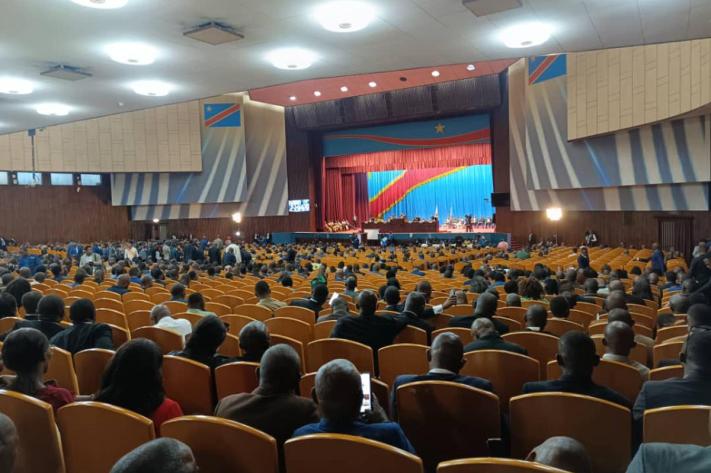
Lawmakers representing North Kivu and Ituri provinces in the Democratic Republic of Congo (DRC) have suspended their participation in parliamentary proceedings, protesting what they describe as Parliament’s failure to address the worsening security crisis in the country’s conflict-ridden east.
The MPs announced their decision on June 13 after expressing frustration that the ongoing violence affecting civilians in eastern DRC was not included among the key issues scheduled for debate in the National Assembly.
The boycott highlights growing concerns among elected representatives from the two provinces, where residents continue to face attacks by armed groups despite years of military operations and emergency security measures.
Among the issues the lawmakers wanted Parliament to discuss was the state of siege imposed in North Kivu and Ituri in 2021. The extraordinary security arrangement granted military authorities expanded powers to combat armed groups, but critics argue it has failed to deliver the expected improvements in security.
The legislators also sought debate on the AFC/M23 conflict, which remains one of the country’s most significant political and security challenges.
Speaking on behalf of his colleagues after leaving a parliamentary session, MP Daniel Furaha Uma said authorities were not giving adequate attention to the deteriorating situation in eastern Congo.
“We are calling on the relevant authorities to appear before Parliament so that this crisis can be fully debated and concrete measures adopted to stop the continued killing of our people,” he said.
The lawmakers demanded that senior security officials, including the Ministers of Interior and Defence, be summoned before Parliament to explain the government’s strategy for addressing insecurity and protecting civilians.
According to the MPs, security conditions continue to worsen, particularly in the Beni territory of North Kivu, where attacks attributed to the Allied Democratic Forces (ADF) have continued to claim civilian lives.
They warned that the violence could spread further into Haut-Uélé Province, raising concerns about additional displacement, humanitarian suffering and instability in areas that have so far been less affected by armed conflict.
Eastern DRC remains one of Africa’s most volatile regions, with dozens of armed groups operating across parts of North Kivu, South Kivu and Ituri. Years of conflict have forced millions of people from their homes, disrupted economic activity and left communities struggling with insecurity and poverty.
The MPs said residents continue to suffer from repeated attacks, displacement and the loss of loved ones as armed groups maintain their activities despite ongoing military efforts.
The AFC/M23 conflict has further complicated the security landscape, with clashes between the rebel movement and government forces continuing even as regional and international mediators pursue diplomatic solutions.
While several peace initiatives and mediation efforts remain underway, violence and tensions continue to persist on the ground, underscoring the challenges facing attempts to restore lasting peace and stability in eastern Congo.
The lawmakers have indicated that they will maintain their boycott until Parliament agrees to give greater attention to the security concerns affecting their constituents and to hold government officials accountable for the country’s response to the crisis.