Rwanda Defence Force (RDF) spokesperson Brig Gen Patrick Karuretwa has said the decision by the Rwanda Patriotic Army (RPA) not to take revenge after defeating the former regime forces in 1994 was a remarkable and deliberate choice rooted in disciplined leadership.
He made the remarks during a televised discussion on July 5, 2026, reflecting on the liberation struggle and Rwanda’s 32-year journey since the end of the Genocide against the Tutsi.
Karuretwa said many RPA soldiers entered Kigali carrying strong emotions after witnessing the aftermath of mass killings, including victims who were close relatives, which made the question of revenge a difficult issue at the time.
“As a young soldier at the time, I had not even reached 20 years,” he said. “The anger of feeling that those who committed those acts should be killed immediately—that is how many of us felt then.”
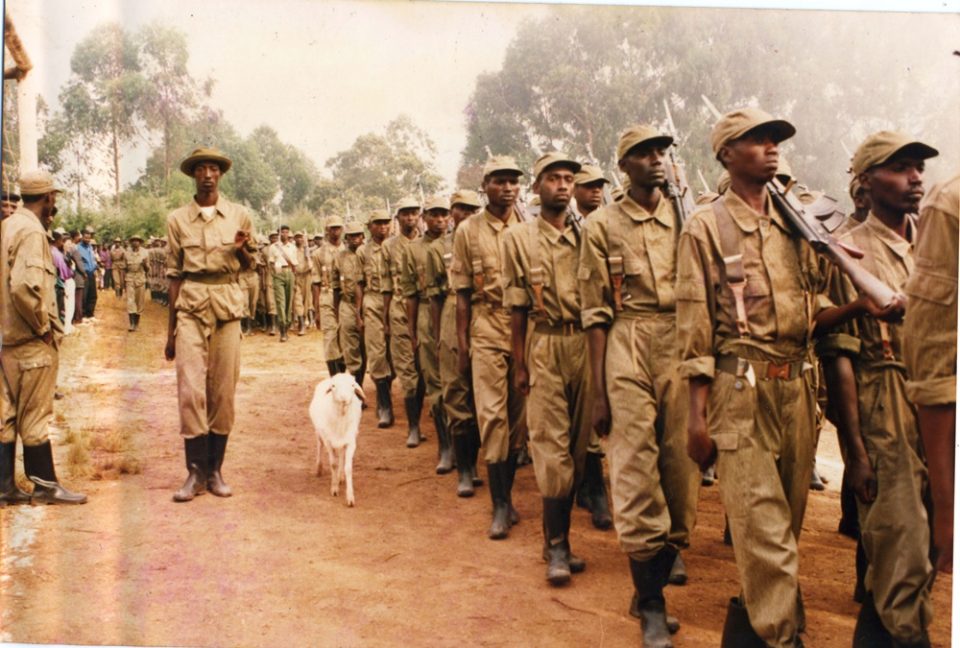
He said soldiers were trained for combat, but ultimately operated under strict command discipline that guided their conduct after victory.
“We had guns, we were trained to shoot, we were fighters,” he said. “But what gave us confidence was the leadership. When the commander said something, it was an order. Even with anger, we trusted that things would be resolved differently.”
Karuretwa said the defining factor was leadership that deliberately prevented retaliatory action and redirected the post-war approach toward stability and rebuilding.
He contrasted the RPA’s approach with that of the former Rwandan Armed Forces (Ex-FAR), saying they were taught to view the enemy in ethnic terms, while the RPA framed the conflict around governance.
“The Ex-FAR were taught that the enemy was the Tutsi,” he said. “For us, the message was clear: the enemy is not a person or an ethnicity, but bad governance. That brought clarity to what we were fighting for.”
He also pointed to the post-war decision to integrate former Ex-FAR soldiers into the national army, saying it was initially difficult for some combatants to understand but has since contributed to unity and reconciliation.
“At the time, it was hard to understand how you integrate people you were fighting,” he said. “But today, unity and reconciliation have been central to rebuilding Rwanda.”
Karuretwa credited the leadership of President Paul Kagame, as Commander-in-Chief, for guiding decisions during and after the war that he said helped shape national cohesion and rebuilding efforts.
“Some of those decisions were not easy to understand at the time, but they produced results,” he said. “Some of those who joined later became very good soldiers and commanders today, whose past is not easily recognizable.”