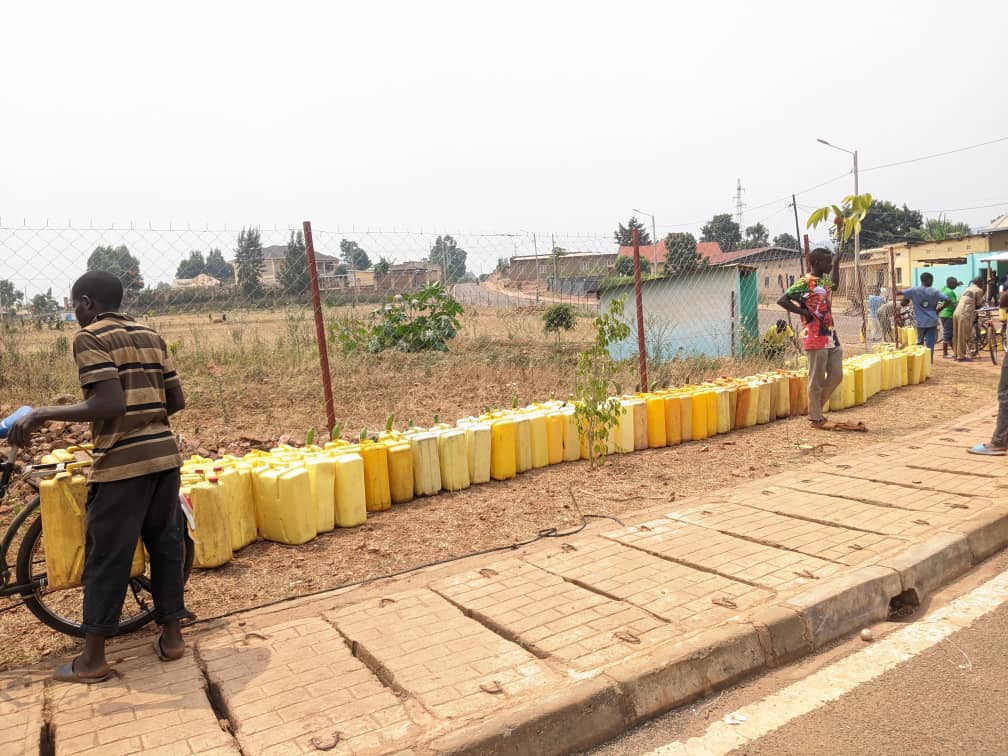
Senator Evode Uwizeyimana has questioned recurring water shortages in Rwanda, saying it is difficult to understand how communities can go for weeks or even months without water while the country experiences destructive floods during the rainy season.
Uwizeyimana raised the issue on Monday, August 3, 2026, during a Senate plenary session where the Minister of Infrastructure presented a report on progress in developing infrastructure in industrial zones on behalf of the Prime Minister.
The senator said Rwanda’s challenge appears to be less about the availability of water than the country’s ability to manage and distribute it effectively.
“During the rainy season we are told there is too much water and that floods are destroying people’s homes. Then, during the dry season, some citizens spend one or two months without water. How do you explain that?” he asked.
He called for greater investment in rainwater harvesting and treatment systems to ensure excess water collected during the rainy season can be stored and reused instead of causing damage.
Uwizeyimana also questioned the continued use of treated drinking water supplied by WASAC for activities such as washing vehicles, watering gardens and construction work.
He said alternative systems should be developed to collect and treat water for non-potable uses, allowing drinking water to be reserved for domestic consumption.
“We should have systems that collect and treat water for uses such as car washing, gardening and construction instead of relying entirely on treated drinking water,” he said.
The senator also criticized what he described as a lack of coordination among institutions responsible for water management.
He recalled discussions with Richard Nyirishema, head of the Rwanda Water Resources Board, who told senators that Rwanda has sufficient water resources and that the main challenge lies in water distribution.
“We were informed that the country does not have a shortage of water resources but rather a distribution problem. That effectively shifts responsibility to WASAC. It is difficult to understand how people can spend two months without water in a country like Rwanda,” he said.
Uwizeyimana also questioned WASAC’s repeated explanation that water shortages are mainly caused by the dry season.
“We are told that rivers have dried up because it is the dry season. But the dry season is predictable. The explanations provided are not convincing,” he said.
Responding to the concerns, Minister of Infrastructure Damien Murwanashyaka acknowledged that aging water infrastructure remains one of the main challenges affecting water supply.
He said old distribution pipelines result in significant water losses before the water reaches consumers.
Murwanashyaka said the government is implementing measures to reduce non-revenue water—water lost through leaks and other inefficiencies—from 31 percent to 15 percent.
According to the minister, the initiative is expected to increase the volume of water reaching consumers by 8,400 cubic metres by the end of this year and by a further 14,000 cubic metres by the end of 2027.