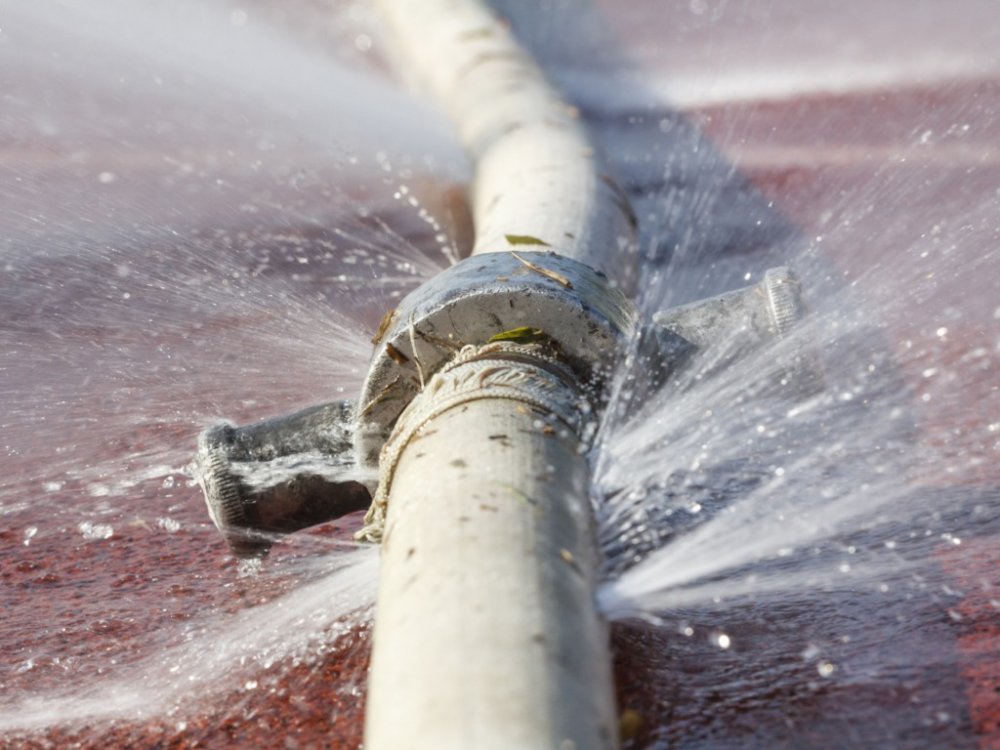
Rwanda has announced plans to reduce treated water losses from the current 31% to 15% as part of efforts to increase water availability for households and industrial zones.
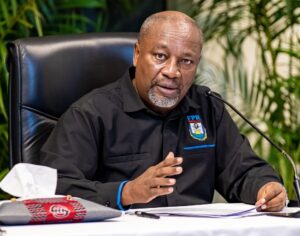
The Minister of Infrastructure, Damien Murwanashyaka, said the government is working to address water losses, commonly known as non-revenue water, while expanding production capacity to meet growing demand. Reducing such losses remains a key priority in Rwanda’s water sector, with national strategies focusing on improving distribution networks and reducing wastage.
Murwanashyaka made the remarks on Tuesday while appearing before the Senate General Assembly alongside Minister of Trade and Industry Antoine Marie Kajangwe to respond to concerns over challenges affecting the development of infrastructure in industrial zones.
Senators had highlighted the need to accelerate the provision of essential infrastructure, including water supply, electricity, and roads, in areas designated for industrial development.
“Currently, 31% of the water produced by treatment plants does not reach users, but we want to reduce this figure to 15% so that more water can reach citizens and industries that need it,” Murwanashyaka said.
He explained that reducing water losses would add an estimated 8,400 cubic metres of water supply by the end of 2026 and 14,000 cubic metres by the end of 2027.
The minister also outlined several ongoing projects aimed at increasing water supply capacity, particularly in Kigali. These include the expansion of the Nzove III water treatment plant, expected to add 25,000 cubic metres of water per day once completed.
Other projects include the expansion of the Kanzenze water treatment plant in Bugesera, which will increase supply by 10,000 cubic metres per day, and the construction of the Karenge water treatment plant, expected to produce 36,000 cubic metres daily upon completion in 2027.
Murwanashyaka further announced plans for the development of Nzove IV, which is expected to begin in 2027 with an initial capacity of 150,000 cubic metres per day. Future expansion phases will each add another 150,000 cubic metres per day.
He said the government’s long-term objective is to ensure that Kigali achieves sufficient water supply by 2030, while similar projects are being implemented across provinces and districts to improve access nationwide.
On electricity, the minister said Rwanda is implementing five projects expected to add 322 megawatts to the national grid, including the Nyabarongo II hydropower project, Rukarara VI, Nyundo, and solar energy initiatives.