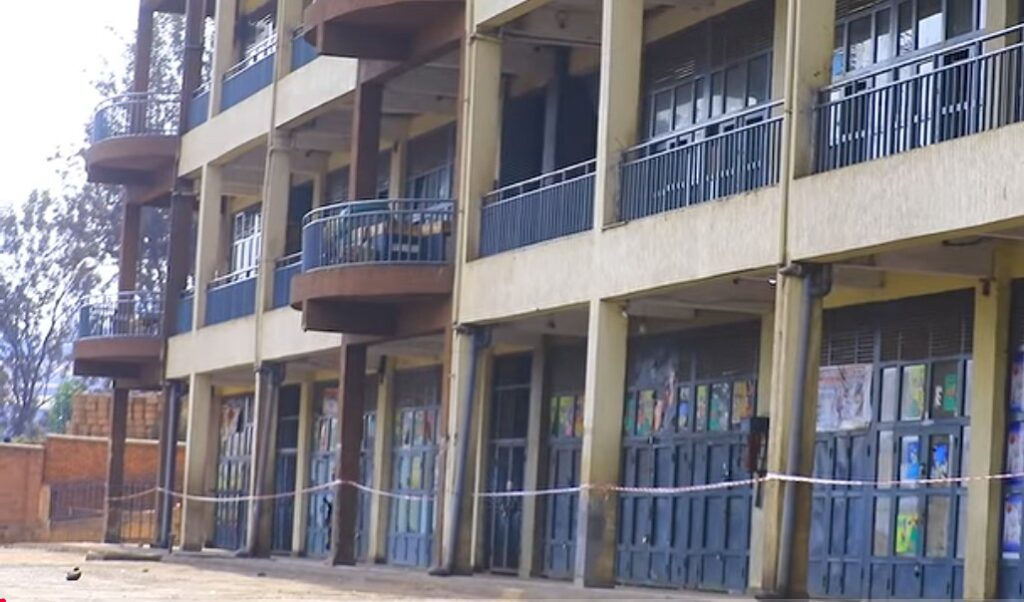
Kigali City has revealed that serious sanitation and waste-management violations, including the alleged discharge of toilet wastewater into drainage channels leading to the Nyabugogo wetland, prompted the temporary closure of the Inkundamahoro building.
The city ordered the temporary closure on August 7 after inspections found that several essential health, safety and environmental requirements for commercial buildings had not been met despite repeated warnings.
Kigali City spokesperson Emma Claudine Ntirenganya said authorities had inspected the building more than three times since May and repeatedly instructed its management to address the problems.
“We have visited them more than three times since May, and whenever we returned, we found that none of the issues we had asked them to address had been corrected,” Ntirenganya said.
She said one of the most serious violations involved the handling of wastewater from toilets.
According to Ntirenganya, wastewater was allegedly released into drainage channels during the night, eventually flowing towards the Nyabugogo wetland.
“The most serious issue is that they take wastewater from the toilets and, at night, discharge it into drainage channels that lead to the Nyabugogo wetland. That is strictly prohibited,” she said.
The city also cited poor waste management, saying the building’s waste collection area was unhygienic and that garbage was not being collected on time.
Ntirenganya warned that the conditions could pose health risks to the public if they were not urgently addressed.
Uwamahoro Protogene, deputy head of the committee managing the Inkundamahoro market, told Rwanda Broadcasting Agency (RBA) that the management would address the violations within five days.
The closure has, however, disrupted traders operating in the building, with some reporting losses, particularly those dealing in perishable goods.
Traders were allowed to enter the premises to remove their merchandise, especially goods at risk of spoiling, while the building remained closed.
Some traders urged the market management to accelerate the corrective works so they can resume business and limit further losses.
Others questioned who would bear responsibility for the losses, arguing that their monthly rent payments include services related to sanitation and security.
The traders and building management are now awaiting completion of the required corrective measures before the premises can reopen.