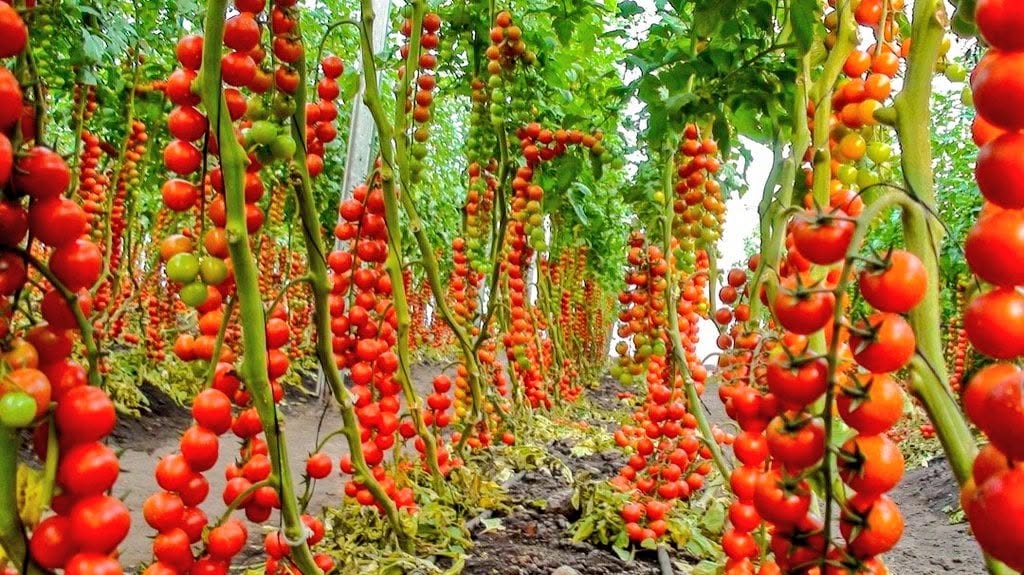
Vegetable farmers in Rwanda’s Southern Province are calling for more cold storage facilities, saying limited storage capacity is contributing to post-harvest losses and forcing them to sell produce at low prices.
The farmers say their production has increased, but available cold rooms have not kept pace, leaving some produce to spoil before it reaches consumers.
Members of Tuzamurane Ruvungirana Cooperative in Rusatira Sector, Huye District, are among farmers seeking additional storage capacity. They say the cold room available to them has helped preserve vegetables after harvest, but its capacity is insufficient for the increasing volume of produce.
According to the farmers, the shortage results in financial losses and limits their ability to wait for more favourable market prices.
Illumine Kamaraba, head of the post-harvest management department at the Rwanda Agriculture and Animal Resources Development Board (RAB), acknowledged that the country still has too few cold storage facilities.
She urged private investors to seize the opportunity by investing in cold-chain infrastructure as the government works to expand the sector.
“We encourage investors to invest in cold storage facilities as the government continues to seek solutions. It is also working with partners and exploring different ways of securing support for the construction of these facilities,” Kamaraba said.
The government has already announced plans to strengthen cold-chain infrastructure. Under the 2026/27 fiscal year budget, the National Agricultural Export Development Board (NAEB) allocated about RWF1.3 billion to the construction and rehabilitation of cold rooms and related facilities under the Export Logistics Development project.
The project is intended to improve Rwanda’s ability to store, process and transport agricultural produce while reducing post-harvest losses and maintaining quality for domestic and international markets.
Separately, the Ministry of Agriculture and Animal Resources (MINAGRI) said in March 2026 that it was partnering with the Africa Centre of Excellence for Sustainable Cooling and Cold-Chain (ACES) to rehabilitate and operationalize 10 cold-room packhouses across the country. The facilities are expected to support more than 400,000 smallholder farmers.
The push comes amid concerns over the performance of some existing cold-storage facilities. Lawmakers have previously questioned why some facilities are underused or not operating effectively despite public investment.
For vegetable farmers in the Southern Province, however, expanding functional cold storage remains an urgent need as production grows.
They argue that more reliable storage would reduce spoilage, protect the quality of vegetables and give farmers greater flexibility in marketing their produce rather than being forced to sell immediately after harvest.