The Rwanda Energy Group (REG) has attributed recurring power outages in parts of the country mainly to ongoing works to upgrade ageing electricity networks and expand their capacity, while outlining measures to improve reliability and minimise disruptions.
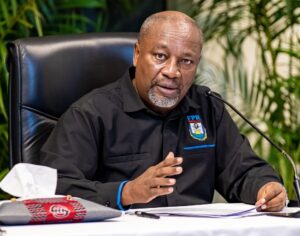
REG Chief Executive Officer Maximilien Byilingiro made the remarks during a meeting with the Senate’s Committee on Economic Development and Finance, where lawmakers raised concerns over frequent power cuts reported by residents.
Senator Mureshyankwano Marie Rose said communities visited by senators had repeatedly complained about intermittent outages, which she said were causing losses through spoiled food and damaged electrical appliances.
“Wherever we went, we found the issue of recurring power outages,” she said.
Byilingiro said power is sometimes deliberately switched off when REG crews are carrying out maintenance, rehabilitation or expansion works, particularly on ageing networks. The outages, he said, are necessary to allow the work to be carried out safely.
To reduce the impact on customers, REG has begun reconfiguring its network so that areas can be supplied through alternative lines when their usual network is undergoing maintenance.
He cited Gahanga and Nzove, where substations have been upgraded to provide additional supply capacity when other facilities, including Gikondo, are taken offline for works.
“Expanding these substations helps us reduce the number of customers affected when we are working on those networks,” Byilingiro said.
REG is also strengthening communication with customers ahead of planned outages, particularly industries and businesses whose operations can be disrupted by power cuts.
Byilingiro said customers would increasingly receive advance notice of planned interruptions to allow them to prepare.
“We have taken communication as an important lesson and strengthened our efforts so that we notify people in advance about what we know will happen,” he said.
Senators urged REG to provide timely and accurate information about planned outages so households and businesses can take measures to protect food, equipment and other property.
REG targets ageing and overloaded networks
Beyond planned maintenance, REG said the quality of electricity supply in some areas is affected by the age and design of parts of the distribution network.
Byilingiro said some long power lines were built decades ago to serve mining areas and communities far from major substations. The distance electricity has to travel can weaken supply by the time it reaches consumers.
REG is therefore upgrading ageing infrastructure and developing shorter supply routes to improve the quality and reliability of electricity delivered to customers.
The utility currently has 472.9 MW of electricity generation capacity, compared with the 615 MW target under the second National Strategy for Transformation (NST2).
Meanwhile, 15 cells across the country remain without electricity. Some of them reportedly received infrastructure, including electricity poles, nearly four years ago but have yet to be connected to the grid.
Renewable energy currently accounts for 56% of Rwanda’s electricity generation capacity, with the country targeting 60% by 2029.
Under its long-term energy plans for 2024–2050, Rwanda also aims to expand solar generation capacity to 1,500 MW by 2050.