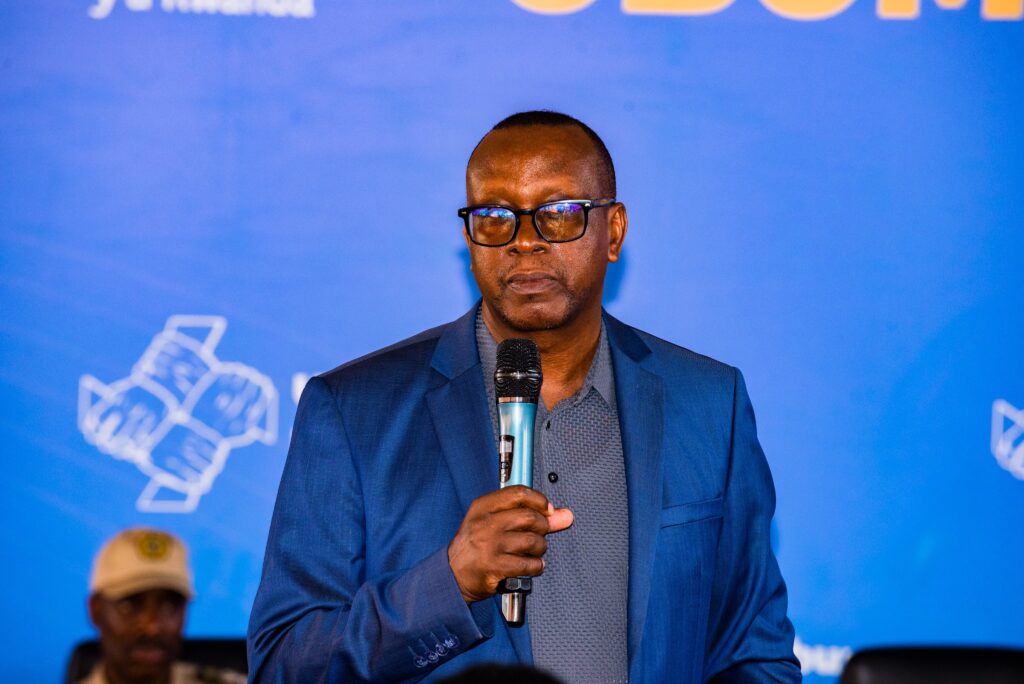
Minister of National Unity and Civic Engagement Dr Damascène Bizimana has urged more than 80 women convicted of participating in the 1994 Genocide against the Tutsi to use their time in prison to reflect on their actions and prepare for reintegration into their families and communities.
Bizimana made the remarks on September 22, 2026, during a visit to women who are nearing the completion of their sentences and are undergoing a rehabilitation and reintegration programme at the Igororero rehabilitation centre in Nyamagabe.
The women have been receiving training at the centre since August 31, with the programme scheduled to conclude on September 23. The training is intended to prepare prisoners for life after incarceration by helping them develop attitudes and values that can support their return to society.
Bizimana encouraged the women to return to their communities as responsible citizens committed to national unity and peaceful coexistence.
He said survivors of the Genocide against the Tutsi would expect those who participated in the killings to demonstrate genuine change after serving their sentences.
“What genocide survivors expect from you is to see that you have changed. They need you to show them that you have truly changed and reformed, and that you are no longer the Interahamwe who used to hunt them and their relatives in 1994,” Bizimana said.
He urged the women to distance themselves from genocide ideology and demonstrate through their conduct that they have embraced the values of responsible citizenship.
“You need to change so that they can see that you are no longer an Interahamwe, but a Rwandan who has properly used the opportunity given to you by the government to distance yourself from genocide ideology. That is what your families expect from you, and it is what other Rwandans expect from you,” he said.
Bizimana also encouraged the women to be open with their relatives about their role in the Genocide against the Tutsi, saying that acknowledging the truth about the past is an important part of the reconciliation process.
He asked those who had concealed their involvement from their children, grandchildren or siblings to consider telling them the truth after returning home.
“Tell the truth to your families as well. If there is anything you have not told your children, grandchildren or siblings, or anything you lied to them about, leave here having made the decision to go home and tell them the truth,” he said.
The minister said the women should explain to their families what they did during the Genocide, what they witnessed and what they were taught, particularly where misinformation or confusion about their past actions had been passed on to younger generations.
He acknowledged that admitting responsibility for killing during the Genocide could be difficult but said it remained possible and necessary for those seeking reconciliation.
“Admitting that you killed someone is difficult, but it is not impossible. It is possible. Reconciliation begins with truth, and healing begins with truth. Go and help your families and free them from confusion,” Bizimana said.
The programme at Nyamagabe forms part of Rwanda’s efforts to prepare prisoners approaching the end of their sentences for reintegration into society. It places emphasis on rehabilitation, responsible citizenship, reconciliation and rejecting genocide ideology as participants prepare to return to their families and communities.