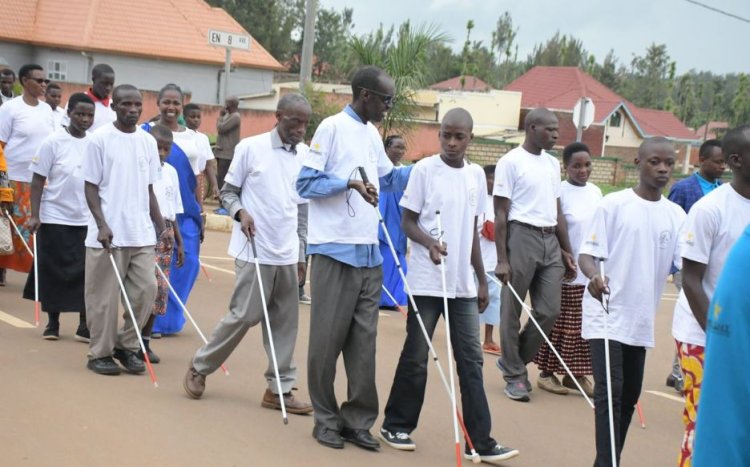
The National Union of Disability Organisations in Rwanda (NUDOR) has called on public and private sector employers to change their attitudes towards people with disabilities, trust their abilities and provide them with employment opportunities and accessible working environments.
The call was made on Wednesday, November 25, 2026, during the launch of the National Business and Disability Network (NBDN), a platform bringing together private sector players to promote disability inclusion in employment and economic activities.
The network will be coordinated by NUDOR in partnership with the Ministry of Public Service and Labour, the Private Sector Federation (PSF), international non-governmental organisations and other stakeholders.
It aims to expand employment and entrepreneurship opportunities for people with disabilities while strengthening their participation in the country’s economy.
The platform will support employers in adopting non-discriminatory recruitment practices, improving workplace accessibility, providing necessary equipment and workplace support, and expanding opportunities for internships and career advancement.
Negative attitudes remain a major employment barrier
Izere Emmanuel, NUDOR’s adviser on disability-inclusive employment, said the network was established to address various barriers that prevent people with disabilities from accessing equal opportunities in the labour market.
He identified employers’ attitudes as one of the biggest challenges, noting that some still doubt the abilities of people with disabilities and assume they cannot perform certain jobs because of their conditions.
Other barriers include limited access to job vacancy information, a lack of appropriate support during recruitment examinations and at workplaces, as well as institutional policies that do not adequately incorporate disability inclusion.
“Somebody sees a person with a disability and immediately begins questioning whether they are capable. That is one of the biggest challenges people with disabilities face,” he said.
He cited recruitment examinations as an example, explaining that employers often fail to make special arrangements that would allow candidates with disabilities to sit examinations fairly and compete for available positions.
He added that some candidates successfully pass recruitment examinations and secure jobs but later struggle to perform their duties because their workplaces are not designed to accommodate their needs.
Izere urged the government and employers to introduce measures that improve access to employment and make workplaces more accessible, enabling people with disabilities to use their skills and capabilities.
“The first thing is to trust people with disabilities and give them jobs,” he said.
Only 38% of public buildings accessible to people with disabilities
Challenges surrounding physical accessibility are also highlighted by a study conducted on 30 public buildings in Rwanda. It found that only 38% met the requirements for enabling people with physical disabilities to access the buildings and receive services without difficulty.
This means that the remaining buildings assessed still have structural barriers that make it difficult for people with disabilities to access facilities and the services provided there.
NUDOR also called for incentives to encourage private companies and other employers to recruit people with disabilities. These could include tax reductions and other benefits to help businesses provide appropriate workplace facilities and support.
NUDOR Director General Dr Mukarwego Betty said that although Rwanda has policies and laws protecting the rights of people with disabilities, gaps remain in their implementation, particularly in changing employers’ attitudes.
She noted that some employers continue to regard people with disabilities as incapable, while others are reluctant to make the necessary workplace adjustments to accommodate them.
“The laws are there and clearly explain these rights, but people’s attitudes have not changed sufficiently,” she said.
The Private Sector Federation (PSF) pledged to work with other stakeholders to address these challenges, increase employment opportunities for people with disabilities and help employers establish more inclusive working environments.
The establishment of the network is aligned with Rwanda’s commitment to protecting the rights of people with disabilities, promoting an inclusive economy and ensuring equal opportunities in the labour market.
The ultimate goal is to ensure that people with disabilities do not merely enjoy legal protection but also have meaningful opportunities to apply their knowledge and abilities, contribute to the organisations they work for and participate in the country’s broader economic development.