The Economic Community of Central African States (ECCAS) has formally approved Rwanda’s decision to withdraw from the regional bloc, calling for administrative, legal and financial procedures to be completed to finalise the process.
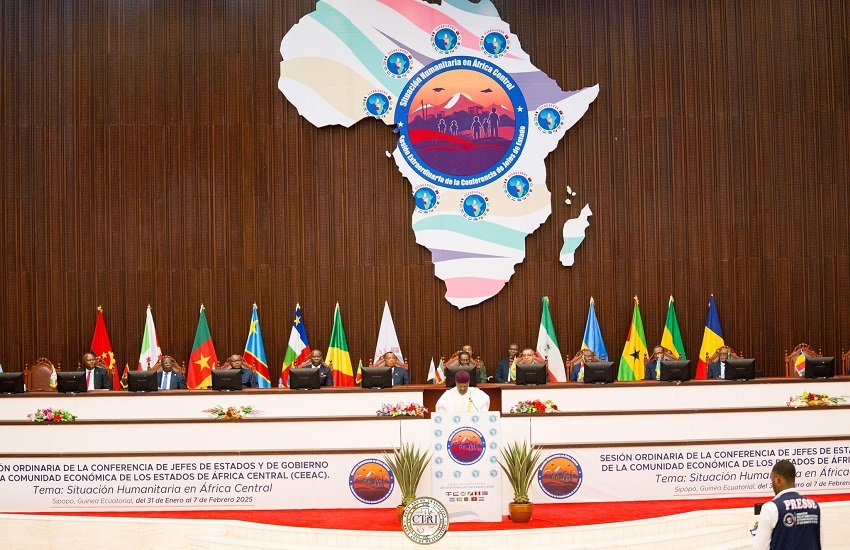
The decision was announced in the communiqué issued after the 27th Ordinary Session of the Conference of Heads of State and Government of ECCAS, held in Sipopo, near Malabo, Equatorial Guinea, on November 27, 2026.
In the statement, regional leaders said they had reviewed the status of Rwanda’s withdrawal process and agreed that all necessary administrative, legal and financial measures should be implemented to formalise its departure from the organisation.
Rwanda announced its withdrawal from ECCAS on June 7, 2025, following disagreements over the bloc’s decision to extend the tenure of Equatorial Guinea’s President, Teodoro Obiang Nguema Mbasogo, as its chairperson.
At the time, Rwanda had expected to assume the ECCAS chairmanship under the principle of rotational leadership among member states. However, a meeting of heads of state held in Malabo in June 2025 decided to extend Obiang Nguema Mbasogo’s term by another year, leaving Rwanda without the position.
The Rwandan government accused the Democratic Republic of Congo (DRC) of using the regional organisation to advance its own interests and influence its decisions, arguing that this violated ECCAS principles and regulations.
The disagreement emerged amid growing tensions between Rwanda and the DRC, largely linked to the conflict and insecurity in eastern DRC.
Following Rwanda’s withdrawal, ECCAS now has 10 member states.
During the same summit, the organisation’s chairmanship was handed over to Chad’s President, Mahamat Idriss Déby Itno, succeeding Teodoro Obiang Nguema Mbasogo.
Founded in 1983, ECCAS seeks to promote economic, political and security cooperation, as well as broader development among Central African countries.