April 23, 1994 marked the 17th day of the 100-day Genocide against the Tutsi, as killings escalated across Rwanda under the direction of the genocidal regime.
Despite an attempted ceasefire announced by the Rwanda Patriotic Army (RPA) to create space for ending the violence, the move was ignored, and mass killings continued unabated nationwide.
By this stage, roadblocks had been erected across the country where Tutsis were identified and executed. Places once considered safe—including churches, health centers, communal offices, schools, markets, and playgrounds—had turned into killing sites.
In southern prefectures such as Butare, Gikongoro, and Cyangugu, large numbers of Tutsis had already been massacred. In the northern regions of Byumba, Ruhengeri, and Gisenyi, most Tutsis had been wiped out within the first week following April 7, 1994.
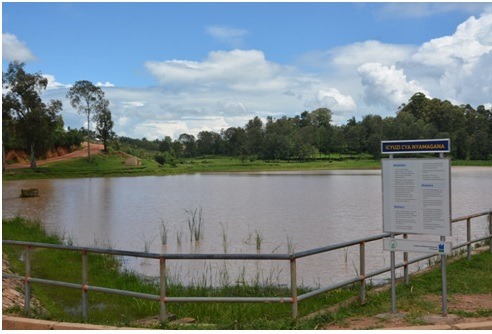
On this day, one of the most tragic घटनाएँ unfolded at Nyamagana pond in Nyanza. Tutsis fleeing violence in Gikongoro Prefecture, particularly from Rukondo and Kinyamakara communes, had sought refuge in Nyanza, believing it to be relatively safe. Survivors from Kaduha Parish also joined them.
Upon reaching Nyamagana, they encountered a heavily guarded roadblock and were reassured they were under protection. Instead, they were trapped, brutally killed using guns, machetes, and clubs, and their bodies were dumped into the pond.
Elsewhere, killings intensified across the country. In Kabuye, in the former Ndora Commune of Butare Prefecture, many Tutsis—some from present-day Nyaruguru—who had sought refuge were massacred.
Tutsis from the former Rwaniro Sector were also killed en masse, while those who had fled to Musange Commune were entirely wiped out. In Musambira, victims were killed on Bitsibo Hill, where mass killings had begun days earlier after authorities gathered displaced Tutsis under the pretext of protection.
On the same morning, around 10 a.m., Interahamwe militia and soldiers carried out coordinated attacks in Musange Commune, in what was then Gikongoro Prefecture.
Across Rwanda, the genocide was orchestrated by the extremist government, with the involvement of political leaders affiliated with Hutu Power ideology, senior military officials, and militia groups including Interahamwe and Impuzamugambi.
Local administrative leaders at commune, sector, and cell levels played a central role in mobilizing civilians to participate in the killings, while only a few resisted or attempted to save lives.
In later events associated with this date, in 2019, the MRCD group led by Paul Rusesabagina claimed that its armed wing, FLN, had entered Nyungwe Forest, where attacks later left civilians dead and others injured.
Additionally, on April 23, 1980, Major Lizinde was arrested over an alleged plot to overthrow President Juvénal Habyarimana.