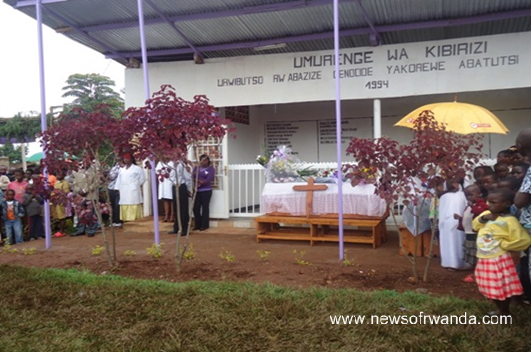
May 3, 1994; day 27 of the 100-day Genocide against the Tutsi was marked by coordinated massacres targeting Tutsi civilians across Rwanda, as the campaign of extermination intensified.
On this day, more than 454 women and children were killed at Ibambiro in the former Muyira Commune, now in Nyanza District, after being deceived with promises of protection. Parallel killings were carried out at ADEPR Gihundwe in present-day Rusizi District.
Ibambiro: False promises turn deadly
Victims—mostly women and children—had gathered at Ibambiro following announcements that they would be protected. The messages specifically claimed that women and girls would not be harmed, prompting many who had been hiding to come out. Some families even disguised young boys as girls in desperate attempts to save them.
By May 1, over 454 people had assembled at the site, believing they were safe. Instead, they endured days of fear as attackers repeatedly came to select individuals for execution, while others were subjected to torture and sexual violence.
On May 3, armed militias surrounded Ibambiro, using traditional weapons and signaling coordination with whistles before launching a full-scale attack that left hundreds dead.
Rusizi: Refuge turns into killing ground
In western Rwanda, Tutsi who had fled violence in Kamembe and Cyimbogo communes sought refuge at ADEPR Gihundwe and the nearby school complex.
After initial hesitation, church authorities allowed them in. However, the site quickly became vulnerable, with early attacks by militia signaling what would follow.
The then Cyangugu Prefect, Emmanuel Bagambiki, attempted to relocate the refugees to Kamarampaka Stadium under the pretext of providing security—an offer many distrusted.
On the morning of May 3, security forces and militia moved in. Refugees were rounded up, confined, and killed using firearms and grenades in a coordinated assault.
A recurring pattern of deception
The massacres at Ibambiro and Gihundwe illustrate a recurring tactic used during the genocide: luring Tutsi civilians into designated “safe” locations—such as churches, schools, and administrative sites—only to attack them once gathered.
As violence spread nationwide, thousands were killed in similar circumstances, many while seeking refuge, underscoring the systematic and deceptive nature of the killings during the genocide.