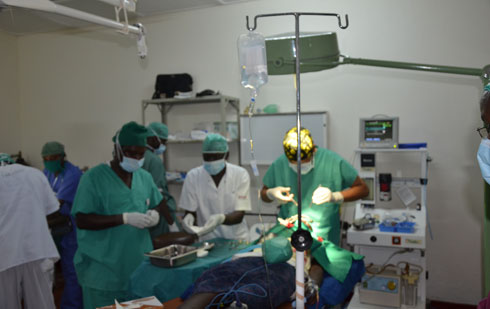
Rwanda plans to invest more than Rwf114 billion to address a critical shortage of specialist surgeons, operating theatres and medical equipment, the Ministry of Health has said.
The funding gap was highlighted during a meeting that brought together surgeons from both public and private hospitals to discuss solutions to long-standing delays in surgical care across the country.
Officials say the shortage has led to severe pressure on health facilities, with patients in need of surgery facing prolonged waiting times.
The Chairperson of the Rwanda Surgical Society, Dr. Faustin Ntirenganya, said major referral hospitals are handling large backlogs of patients awaiting operations.
“At CHUK alone, there are about 3,000 patients waiting. In Musanze there are around 1,000, and other hospitals also have large numbers on waiting lists,” he said.
He added that patients often face extended delays even before being assessed for surgery.
“A patient coming to CHUK for consultation may wait more than eight months, and if surgery is required, the wait becomes even longer. This is a serious challenge,” he said.
Health authorities say patients currently wait between eight months and two years to access surgical procedures, depending on the case and hospital capacity.
Medical professionals at the meeting called for increased investment in training, equipment, and operating theatres, alongside stronger coordination between public and private facilities to ease pressure on referral hospitals.
President of the Private Medical Practitioners’ Association, Dr. Dominique Savio Mugenzi, said closer collaboration between sectors could help reduce waiting lists by distributing surgical workloads more efficiently.
Permanent Secretary at the Ministry of Health, Dr. Jean Marie Vianney Ndayizigiye, said the government plans to address the gap through a five-year investment programme worth $78.5 million (over Rwf114 billion), running from 2026 to 2030.
Rwanda currently has 226 surgeons against a required 1,400, while the number of operating theatres remains far below demand. Health officials say one theatre currently serves about 100,000 people, compared to the recommended standard of five patients per theatre.