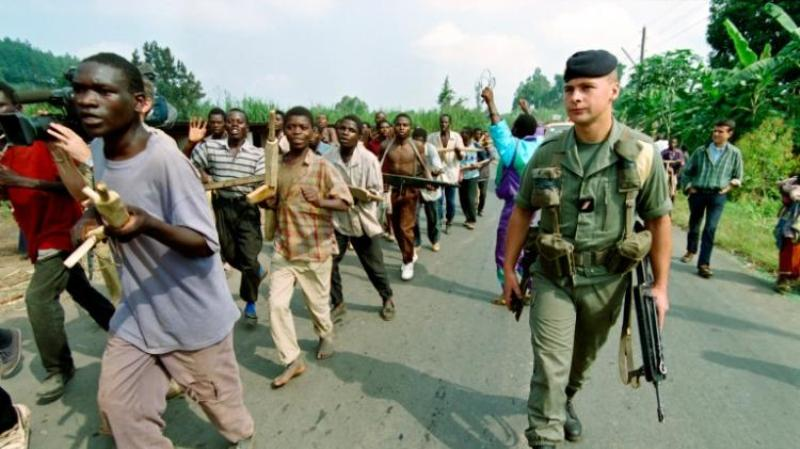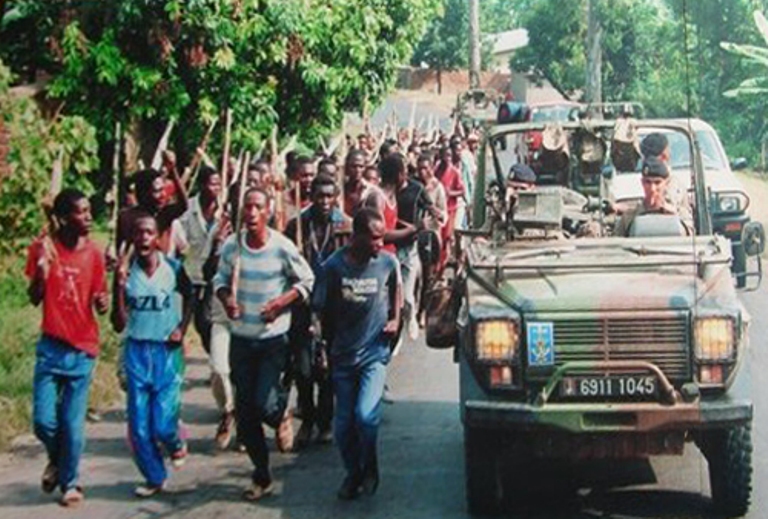
June 10, 1994 marked the 66th day of the Genocide against the Tutsi, as Rwanda’s interim government intensified efforts to arm civilians and accelerate the killings across the country while the Rwanda Patriotic Front (RPF-Inkotanyi) continued advancing on several fronts to rescue survivors and liberate occupied areas.
Documents from a Cabinet meeting held on that day reveal how the government led by Prime Minister Jean Kambanda expanded the distribution of firearms through what officials referred to as the “civil self-defence” programme, a mechanism that became a key tool in the execution of the genocide.
According to records contained in the agenda of former Minister of Family and Women’s Affairs Pauline Nyiramasuhuko, ministers agreed that every trader should purchase at least two firearms—one for personal use and another to be provided to neighbours in their community.
The decision formed part of a broader government strategy aimed at increasing the availability of weapons among civilians and militia members involved in the killings.
The Cabinet also approved the distribution of firearms to schools, with each institution expected to receive ten guns. The discussions underscored the government’s determination to expand the reach of the “civil self-defence” programme throughout the country.
Officials expressed concern that the programme was not progressing as expected in Gisenyi Prefecture, but praised its implementation in Butare, where local authorities were commended for their efforts. The Cabinet approved an additional allocation of two million Rwandan francs to support the programme in the prefecture.
The records indicate that the government was directly financing and overseeing the distribution of weapons, providing further evidence of its central role in organizing and facilitating the genocide.
The meeting also reviewed the ongoing distribution of firearms to civilians, particularly members of the Interahamwe militia. Ministers praised the implementation of the programme in the Rulindo combat zone and commended military commanders operating in the area.
They also highlighted cooperation between local authorities in Rushashi, then part of Kigali-Rural Prefecture, and Kiyumba in Gitarama Prefecture, describing their efforts as an example that other regions should emulate.
In Ruhengeri Prefecture, officials praised Lieutenant Colonel Marcel Bivugabagabo for his leadership of the programme and reported that 120 firearms had been distributed in Kinigi Commune. At the same time, concerns were raised about what ministers described as disorganization within the military command structure in Butare.
Additional evidence of government support for the programme appears in the agenda of former Planning Minister Augustin Ngirabatware. His notes indicate that the “civil self-defence” initiative was progressing satisfactorily in Gitarama, Gisenyi and Ruhengeri.
Ngirabatware also recorded that an immediate disbursement of 50 million Rwandan francs had been approved to support the programme nationwide. The funding followed a supplementary budget allocation that had been endorsed by the Cabinet on June 9, 1994.
Nyiramasuhuko’s notes further indicate that ministers expressed satisfaction that the population had embraced the programme, claiming that citizens understood their responsibilities and were actively participating.
The discussions suggest that government leaders viewed the initiative as successful because it was expanding participation in the genocide and advancing their objective of eliminating the Tutsi population.
The Cabinet agreed that local cell leaders and burgomasters should be commended for their role in implementing the programme. However, officials criticized Laurent Twagirayezu, the burgomaster of Butamwa Commune and a member of the MDR party, for allegedly fleeing his commune.
Government records noted that 80 firearms were discovered in his office and had not yet been distributed. The weapons were subsequently seized and redistributed as part of the ongoing arming campaign.
The decisions taken on June 10, 1994 provide further documentary evidence of the interim government’s direct involvement in organizing, funding and coordinating the mechanisms that facilitated the Genocide against the Tutsi.