



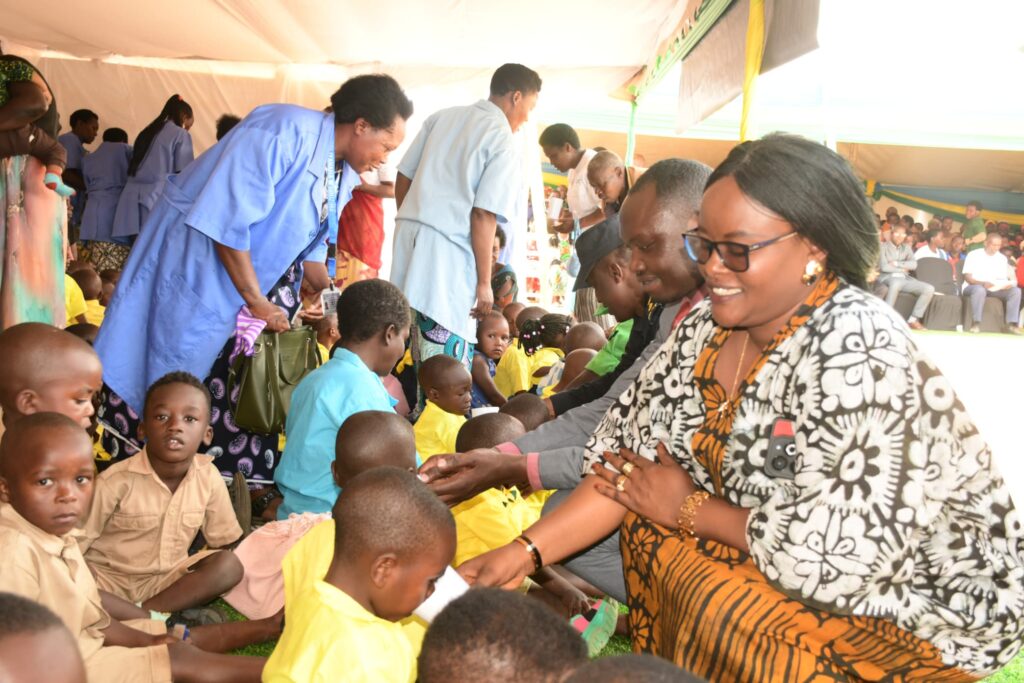
Residents and local leaders in Musebeya Sector, Nyamagabe District, have credited Early Childhood Development (ECD) centres with improving child welfare and significantly reducing stunting among young children.
The commemoration of the International Day of Early Childhood Development was held under the theme: “Early Childhood Centres, the foundation of the child development we want.”
Parents said ECD centres have transformed childcare practices by providing safe spaces where children are cared for while parents engage in income-generating activities.
One parent, SINABUBARIRA Judence, said life was challenging before the introduction of ECD centres, as parents struggled to find safe childcare options. She noted that this sometimes affected hygiene and forced older siblings to miss school in order to care for younger children.
She said the centres have improved children’s safety, hygiene, and nutrition, while also supporting early childhood development and social skills.
She expressed gratitude to the government for introducing the programme, saying it has eased the burden on families.
Nyamagabe District Vice Mayor in charge of Social Affairs, Agnès Uwamariya, said ECD centres play a key role in monitoring child development and identifying malnutrition cases at an early stage.
She said children are regularly assessed, and those found with nutritional challenges are supported and followed up to ensure recovery.
Uwamariya added that the centres have strengthened community awareness, with parents applying lessons on hygiene, balanced diets, and childcare practices at home.
According to district data, stunting levels have dropped significantly over the past five years, from 51% to 29%, with a target of reducing the rate below 10%.
She also commended development partners, including CARITAS Rwanda, DUFATANYE Organisation, SOS Children’s Villages Rwanda (Gikongoro), and others, for their contribution to early childhood development in the district.
Nyamagabe District currently has 1,655 ECD centres, including 1,483 home-based centres, 56 community-based centres, 114 school-based centres, and two model centres. These centres serve 45,328 children and are supported by 6,047 caregivers.




