President Paul Kagame has renewed accusations that the Democratic Republic of the Congo (DRC) has consistently supported the Democratic Forces for the Liberation of Rwanda (FDLR), arguing that Kinshasa’s alleged backing of the armed group has undermined repeated efforts to achieve lasting peace between the two neighbours.
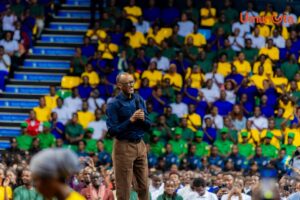
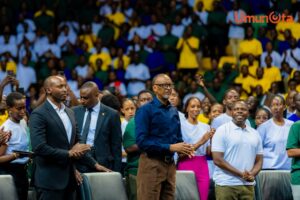
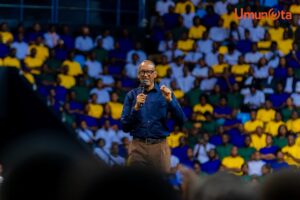
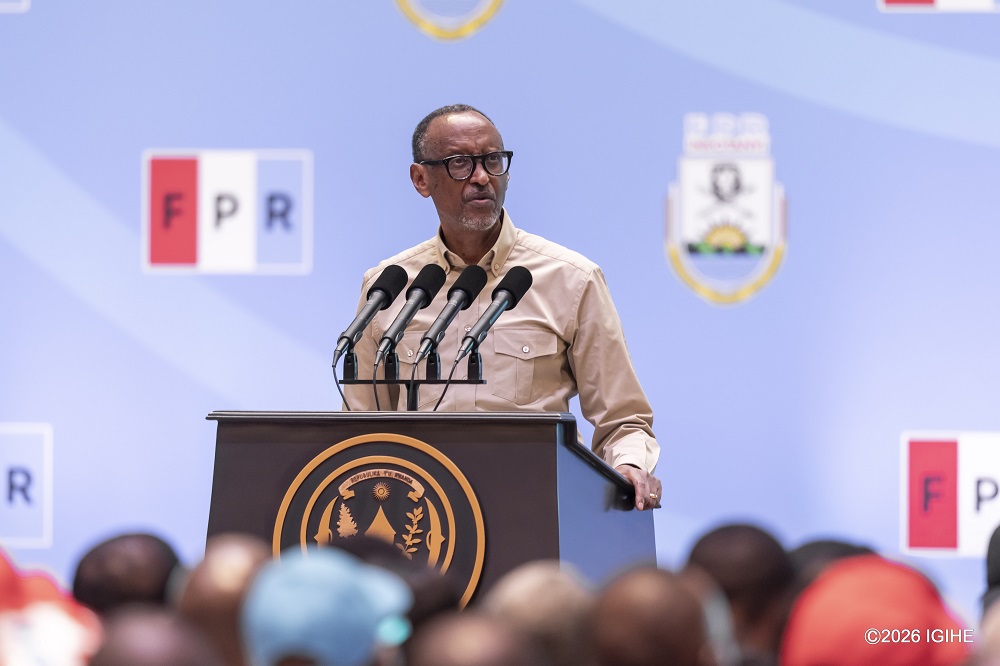
Speaking at a meeting of the RPF-Inkotanyi Political Bureau, Kagame said that despite numerous rounds of negotiations, the DRC had failed to address what Rwanda considers its primary security concern by continuing to support the FDLR, an armed group whose leaders include individuals accused of participating in the 1994 Genocide against the Tutsi.
“Congo has never wanted peace. It continued supporting the FDLR in its fight against us. Later, they joined forces with soldiers from other countries—you know the story of Goma. We simply told them: help us resolve the FDLR problem, and our concerns will be addressed,” Kagame said.
He argued that Rwanda has repeatedly sought cooperation with Kinshasa to eliminate the FDLR, questioning why the conflict in eastern Congo is frequently portrayed as Rwanda’s responsibility.
“We are not the source of this problem in Congo,” he said.
Kagame also dismissed suggestions that fighters from the AFC/M23 rebel movement would eventually relocate from eastern DRC to Rwanda.
“There is another agenda behind that. They expect us to receive M23 here,” he said.
Recalling a meeting of regional heads of state shortly after the conflict escalated, Kagame said he challenged Congolese President Félix Tshisekedi over what he described as attempts to shift responsibility onto Rwanda.
“‘Mr President, how did this become Rwanda’s problem? How did it become our responsibility when it neither began in Rwanda nor originated with us?’ I asked him,” Kagame said.
He said he also questioned Tshisekedi about the FDLR’s presence in eastern DRC.
“‘Are you aware that in nearly all the rural areas, the FDLR has taken control of territory and is even collecting taxes?'”
According to Kagame, Tshisekedi acknowledged being aware of the situation.
“I then asked him, ‘What do you think the FDLR is doing there? And why do you allow it to remain? We asked to work together to resolve this problem, but you refused.'”
Kagame further argued that debates over whether members of the M23 rebel group are Congolese are rooted in historical issues dating back to the colonial period and should not be attributed to Rwanda.
“I should not be held accountable for events that occurred during colonial rule. I wasn’t alive then. Those who were should answer those questions. Rwanda should not be blamed for them either,” he said.
The president also insisted he would continue speaking about the FDLR despite international criticism, saying he would not be silenced.
“They say, ‘We’ll support those who want to come and kill them, as they did before. We’ll deal with it however we want—you keep quiet.’ I will only be silent when I am dead. That is the only way to silence me,” Kagame said.
He also revealed that Rwanda had shared intelligence months before the Washington peace agreement was signed, warning of possible developments in Uvira involving Burundian troops and what he described as their plans.
“We gave them all the information. They knew it and cannot deny it—it is documented and supported by evidence. So when Uvira was captured, they immediately found an opportunity to say, ‘Let’s blame Rwanda,'” he said.
Kagame said Rwanda had initially welcomed the Washington peace initiative, believing it offered a credible framework for resolving the crisis through political dialogue, security measures and regional economic cooperation.
“Initially, I believed the plan they presented for resolving the crisis was a good one. They said they wanted to address the political issues first, followed by the security concerns involving Rwanda and the region, and then move on to economic cooperation among the United States, Congo, Rwanda and the wider region,” he said.
He concluded by asserting that any attempt to threaten Rwanda’s security would not succeed.