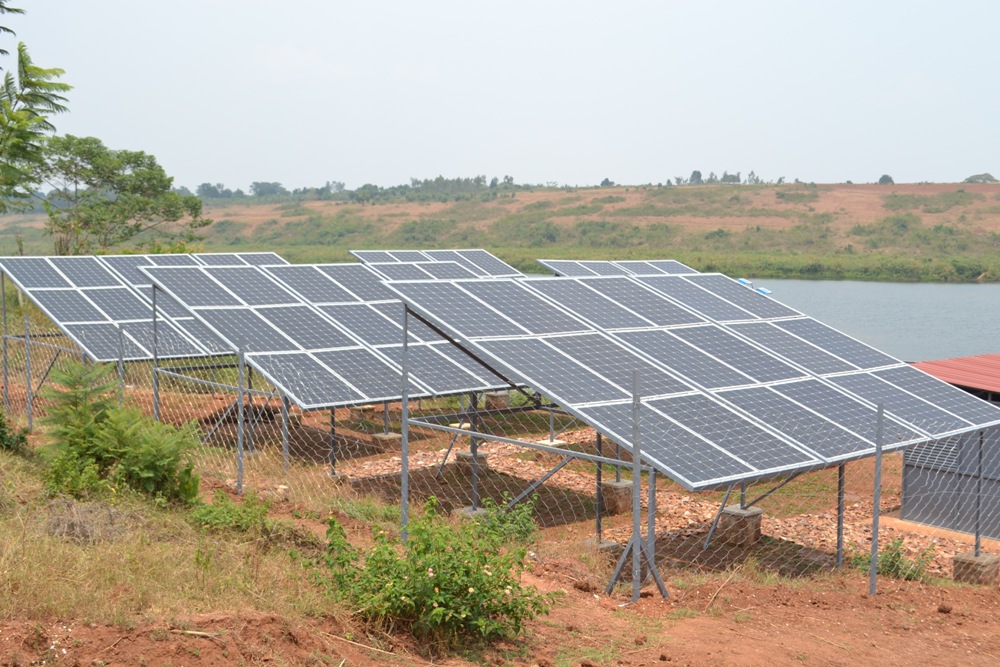
Rwanda’s ambitious plan to achieve universal electricity access by 2030 is driving increased investment in renewable energy, particularly solar power. However, many households and businesses say high installation costs and regulatory barriers continue to limit the widespread adoption of the technology.
The government has identified solar energy as a key component of its long-term strategy to expand electricity access and reduce dependence on conventional power sources. Yet consumers argue that the cost of solar panels, batteries and other equipment remains prohibitively expensive.
Businesses that rely heavily on electricity say frequent power outages continue to disrupt operations. Traders dealing in perishable goods and service providers dependent on a stable power supply report suffering significant financial losses whenever electricity is interrupted.
Some investors, including hotel owners, also say electricity tariffs remain high while the available supply is not always sufficient to meet their operational needs.
To reduce reliance on the national grid, an increasing number of consumers are turning to solar energy. However, many are calling on the government to expand subsidies beyond off-grid communities, arguing that financial support would make solar systems more affordable for households and businesses already connected to the grid.
Under the current subsidy programme, government support is largely limited to households in areas without access to the national electricity network. The subsidized systems are primarily designed to power lighting and other basic household appliances, making them unsuitable for users with higher energy demands.
Solar users also cite restrictions on installing systems with a generation capacity exceeding 100 kilowatts, saying the policy limits investment in larger-scale renewable energy projects.
According to available data, more than 900 villages in Rwanda currently use solar energy, while 15 villages still lack electricity despite some having power infrastructure installed several years ago.
Experts estimate that an average household rooftop in Rwanda could generate at least two kilowatts of electricity through solar panels. The government is exploring a net-metering system that would allow households to sell excess electricity generated from rooftop solar installations to the national grid, creating an additional source of income while increasing the country’s power supply.
Prime Minister Justin Nsengiyumva recently said the government is considering measures to expand the contribution of solar energy to Rwanda’s electricity mix. He encouraged households to install rooftop solar systems, noting that the Rwanda Energy Group (REG) is assessing a framework to purchase surplus electricity generated by consumers instead of allowing it to go to waste.
The government also plans to integrate a 200-megawatt solar facility into the Nyabarongo II hydropower project and increase the country’s installed solar capacity to 1,500 megawatts by 2050. More than US$16 billion is expected to be invested in solar energy over the next 25 years as Rwanda seeks to build a more resilient, affordable and sustainable electricity sector.