Rwanda has officially launched the African Academy for Women in Political Leadership, a continental initiative designed to tackle the persistent underrepresentation of women in political leadership and decision-making across Africa.
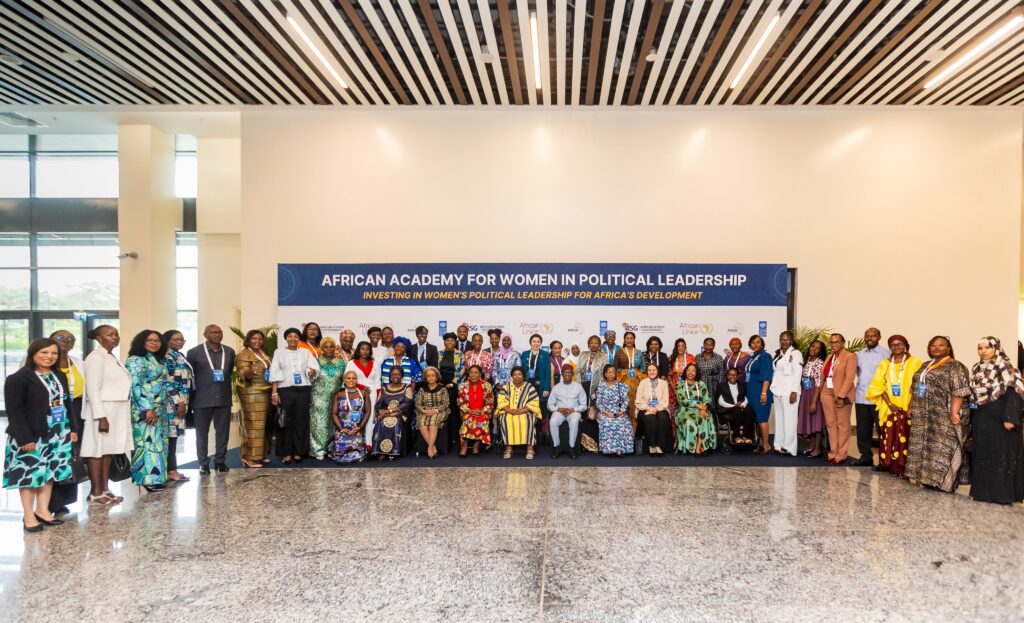
The academy was inaugurated in Kigali on Monday, bringing together senior women leaders from across Africa and the Caribbean for its inaugural leadership programme.
The initiative aims to equip women in political leadership with the knowledge, skills, and networks needed to strengthen democratic governance, promote inclusive leadership, and enhance their effectiveness in public office.
The first cohort comprises 40 women serving in high-level political positions, including ministers, members of parliament, parliamentary speakers, district leaders, and heads of political parties from 28 countries across Africa and the Caribbean.
The academy is a joint initiative of the African School of Governance (ASG), the United Nations Development Programme (UNDP), and the African Union Commission (AUC).
In addition to strengthening leadership capacity, the academy is expected to provide a platform for current and aspiring women political leaders to exchange experiences, foster collaboration, and build a strong network of female leaders committed to advancing good governance across the continent.
Speaking at the launch, Francis Gatare, Chief Executive Officer of the African School of Governance, described hosting the academy as both an honour and a significant responsibility. He said ASG is committed to ensuring the institution contributes to shaping a more inclusive, effective, and forward-looking political leadership for Africa.
Former President of the Central African Republic, Catherine Samba-Panza, said expanding women’s participation in political leadership reflects the vision and resilience needed to drive Africa’s development. She noted that the academy is not only an investment in women’s leadership but also a strategic step toward strengthening governance across the continent.
Former Ethiopian President Sahle-Work Zewde underscored the academy’s significance, saying it will prepare women not only to assume leadership positions but also to address Africa’s complex political and security challenges through informed and transformative leadership.
Although women’s representation in political leadership has improved in several African countries, they remain significantly underrepresented in decision-making positions, underscoring the continued need for initiatives that promote gender-inclusive governance across the continent.