For many Rwandans, accessing basic government services once meant long journeys across hills and valleys. Today, residents say decentralisation has brought essential services closer to their homes and changed how they access healthcare and other public services.
In the health sector, parents once had to travel long distances with sick children in search of medical care, sometimes without knowing where they would find help. Women seeking maternity services faced similar challenges.
Today, residents can find community health workers in their villages, while other government services have also been brought closer to communities.
One resident said decentralisation has significantly changed access to essential services.
She recalled that when they were children, seeking medical care often involved long and difficult journeys.
“Back when we were children, our parents could take us to hospital, crossing hills and steep slopes and travelling a long distance before finding someone to help us. But now, the government has brought services closer to us, and you can find a community health worker right in your village,” she said.
She added that when a child falls ill, a community health worker can provide basic assistance and help the family determine what to do at an early stage.
Her experience illustrates how bringing services closer to citizens has translated from government policy into changes that people can experience in their daily lives.
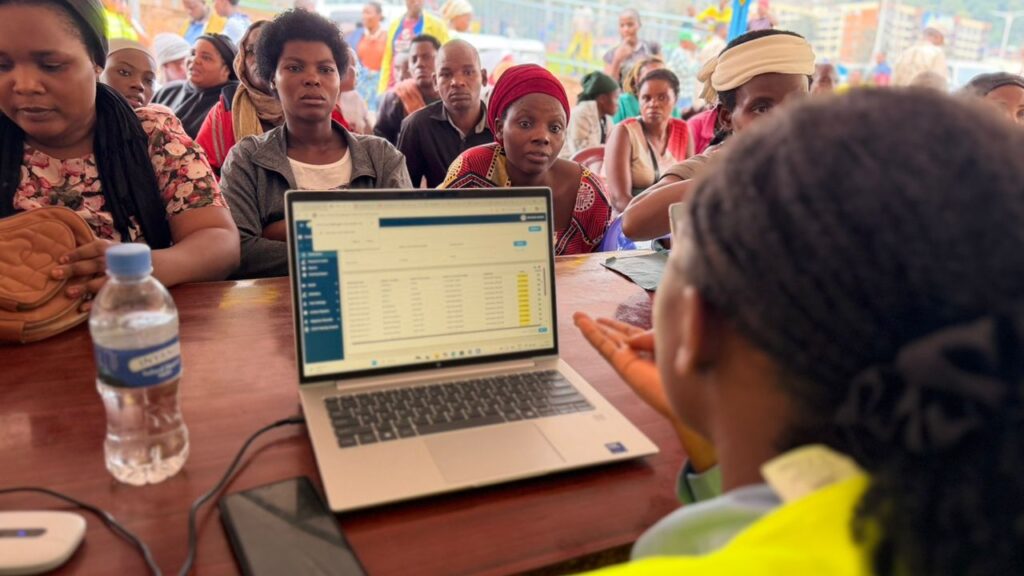
Another resident described how decentralised services helped resolve a problem with incorrect information on his documents.
“I had come to the sector office to seek a service. I was going to the health centre for treatment, but they found that my name had been entered incorrectly and did not match. They told me to come to the sector office, where they corrected my documents and gave me the right ones. I took them straight back to the health centre, and they treated me without any further problem,” he said.
More work needed
Despite the progress, the Ministry of Justice says more needs to be done to ensure decentralisation delivers better results.
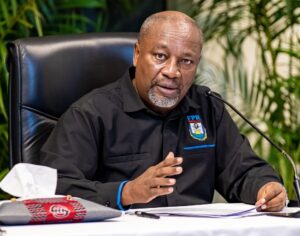
The ministry’s Permanent Secretary, Théophile Mbonera, said Rwanda has made significant progress in bringing governance and services closer to citizens, but the focus must now shift from discussions to implementing solutions to remaining challenges.
“Rwanda’s journey towards decentralisation has achieved a lot. The next step is to make decisions and move from discussions to implementing what needs to be done, particularly where gaps in decentralisation still exist,” Mbonera said.
He said better alignment between responsibilities and actions would help strengthen good governance, improve service delivery and increase citizens’ participation in governance and accountability.
Citizens’ role in decision-making
For Never Again Rwanda, bringing governance and services closer to citizens should also give them greater opportunities to participate in decisions that affect their lives.
Speaking during events marking the International Day of Democracy, the organisation’s executive director, Dr Joseph Ryarasa Nkurunziza, said the annual discussions provide an opportunity to assess progress in implementing decentralisation and identify areas that require improvement.
“It is International Day of Democracy, and promoting democracy means bringing governance and services closer to citizens and ensuring that they participate in what is being done for them,” he said.
Nkurunziza also said citizens have a responsibility to help improve service delivery by reporting problems when services are not provided properly.
“Citizens understand that they also have a responsibility to participate in what is being done for them. If something is not going well, they should report it to the relevant authorities so that it can be corrected,” he said.
More than two decades of decentralisation
Rwanda introduced its decentralisation policy in 2000 and revised it in 2006, 2012 and 2021. The process remains part of the country’s Vision 2050 framework.
Administrative reforms replaced the former system of 12 prefectures, 22 sub-prefectures, 154 communes, 1,545 sectors and 9,165 cells with four provinces and the City of Kigali, 30 districts, 416 sectors, 2,148 cells and 14,837 villages. The village level was introduced as a new administrative structure.
Local councils were also established, with elected representatives at village, cell, sector, district and City of Kigali levels.
The decentralisation model is based on cooperation between central and local government institutions and the principle that responsibilities should be assigned to the lowest level capable of carrying them out effectively, with the authority, resources and accountability mechanisms required.
For residents, the impact of these reforms is reflected in everyday experiences: a sick child can receive initial assistance from a community health worker in the village, while administrative problems can sometimes be resolved at a nearby sector office instead of requiring a long journey to another part of the country.
The experiences also show that bringing services closer is only one part of decentralisation. As Rwanda continues to implement the policy, government institutions and civil society organisations say attention must also be given to improving the quality and efficiency of services, addressing gaps that remain and ensuring citizens can participate in decisions that affect them.
The journey from a parent crossing hills in search of medical care to a family accessing basic assistance close to home therefore illustrates both the progress made and the work that remains. For decentralisation to continue improving people’s lives, the emphasis is increasingly shifting from physical proximity to services to how effectively those services respond to citizens’ needs and how meaningfully citizens participate in the governance of their communities.