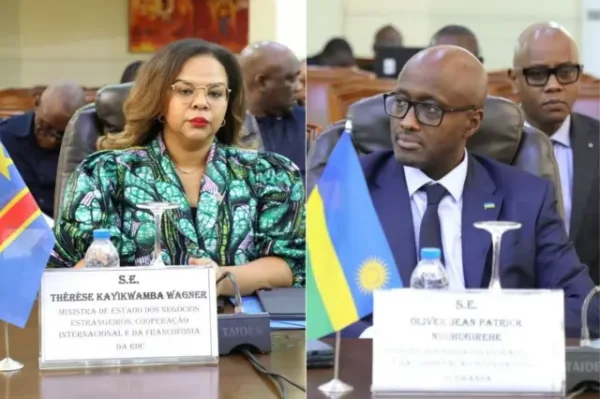
Rwanda’s Minister of Foreign Affairs and International Cooperation, Olivier Nduhungirehe, has criticised a statement by the Democratic Republic of Congo (DRC) regarding the agreement reached on the leadership of the International Organisation of La Francophonie (OIF), saying it misrepresented what the parties had agreed.
In a post on X, Nduhungirehe said his DRC counterpart, Thérèse Kayikwamba Wagner, should avoid giving the public misleading information, particularly about the terms under which Louise Mushikiwabo will continue leading the OIF.
He challenged Kayikwamba’s claim that Mushikiwabo would remain in office during a 12-month transitional period but would only oversee the organisation’s routine operations and prepare reforms to the rules governing the election of the next Secretary General.
Nduhungirehe insisted that the agreement provides for Mushikiwabo to retain full powers as OIF Secretary General until December 31, 2027, rather than serving in a caretaker capacity.
He explained that the DRC’s account did not reflect the proposal initially presented by Rwanda, which was discussed with several Heads of State, including the Presidents of Senegal, Togo and Benin, before being presented to DRC President Félix Tshisekedi.
According to Nduhungirehe, President Tshisekedi initially wanted a transitional period during which Mushikiwabo would not be responsible for overseeing the process.
Under that proposal, the OIF Administrator would have been entrusted with managing the organisation’s day-to-day affairs and preparing reforms to the rules governing the election of the next Secretary General.
However, Nduhungirehe said the final agreement provided for Mushikiwabo to remain at the helm of the organisation until December 31, 2027, with full responsibilities and authority as Secretary General.
He added that reforming the process for selecting the next Secretary General would also fall within her responsibilities during that period.
Nduhungirehe also addressed Rwanda’s decision not to nominate a successor to Mushikiwabo, explaining that it was one of the proposals Rwanda had put forward during the negotiations.
He said such a decision is a normal option in negotiations among member states of international organisations and that the DRC should not claim credit for having initiated it.
His remarks follow a statement by Foreign Minister Thérèse Kayikwamba Wagner, who said the agreement reached at the OIF summit in Phnom Penh, Cambodia, provided for a 12-month transition period, during which existing candidacies would remain valid while additional candidates could also be nominated under new arrangements to be agreed upon.
Louise Mushikiwabo has led the OIF since 2019 and was re-elected for a second term in 2022. At the organisation’s 20th Summit of Heads of State and Government in Phnom Penh, member states agreed that she would remain in office until December 31, 2027.