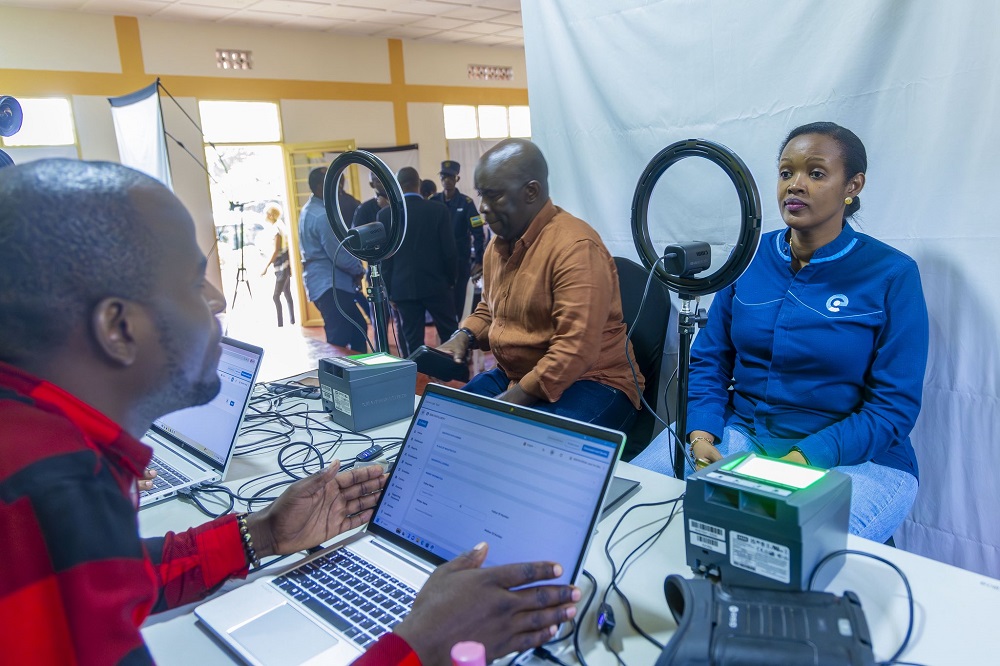
More than 10 million people in 27 of Rwanda’s 30 districts have so far had their photographs and biometric details captured as the country rolls out its digital identity system, the National Identification Agency (NIDA) has said.
NIDA released the figures on Wednesday, September 16, 2026, as the biometric registration exercise got underway in Rusizi District.
The exercise began in nine sectors of Rusizi, with the remaining sectors expected to be covered next week. After Rusizi, the programme will move to Musanze, Burera and Rubavu districts.
The new digital identity system will allow citizens to use different forms of identification. They will be able to obtain a physical identity card, access a digital version through a QR code stored on a phone or computer, and receive a “token” that can be used to access their personal information.
The token will be separate from a person’s national identification number.
The system is also expected to reduce the need for citizens to carry a physical identity card whenever they need to access certain services.
During registration, NIDA captures key biometric information, including fingerprints, iris scans and facial images.
Children from birth to five years old will receive an identity document containing a photograph only because their biometric features are still changing. From the age of five, children will be eligible to provide the required biometric data.
The digital identity project was launched in 2023 as part of a broader programme implemented by Rwanda in partnership with the World Bank, with an investment of about Rwf200 billion.
The rollout is intended to strengthen the identification system while giving citizens more convenient ways to verify their identity and access public and other services.