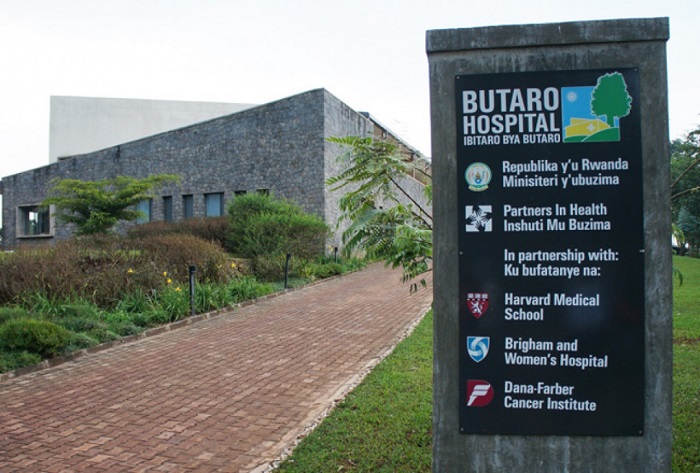
Butaro Hospital in Burera District, Northern Province, has provided cancer treatment to more than 24,500 patients since 2012, highlighting Rwanda’s progress in expanding access to cancer care.
Of the patients treated, 8 per cent were children under the age of five, while cancers affecting women, including breast cancer, accounted for 51 per cent of cases.
Cancer survivors in Rwanda say they are encouraged by the progress made in the country, which has reduced the need to seek treatment abroad. They also appreciate the availability of cancer treatment for patients covered by the community-based health insurance scheme, known as Mutuelle de Santé.
Many patients have now gone years without showing signs of the disease, giving them hope that they have recovered.
Nyirangabe Sawiya, a resident of Kigali, said she was diagnosed with breast cancer in 2014 and began treatment at Butaro Hospital in 2015. She said doctors recently informed her that she was no longer showing signs of cancer.
“They told me in February this year that I had recovered, and they stopped my medication. It felt like a miracle from God because, when you are told you have cancer, you usually think about death. But I never believed that was how things had to end for me,” she said.
Ingabire Chantal shared a similar experience, saying her son was diagnosed with blood cancer at the age of nine. Now 16, he no longer requires medication following treatment at Butaro Hospital.
“For the past three years, we have been taking him for blood tests, and the doctors tell us that his health is good and there are no problems. He has recovered,” she said.
Dr Cyprien Shyirambere, head of the cancer programme at Partners In Health, which works with the hospital to provide cancer care, said early diagnosis and treatment increase a patient’s chances of recovery.
He emphasised that even when patients no longer show signs of cancer, they must continue attending medical follow-up appointments for up to five years.
“What we assess is what we can see, but cancer can actually remain hidden in different parts of the body and sometimes return,” he said.
Cancer screening and treatment services continue to expand across Rwanda. According to the Ministry of Health’s 2024/25 report, the country has 13 CT scanners across 12 facilities, alongside five MRI machines and six other machines used in breast cancer diagnosis.
These technologies help medical professionals detect cancer, determine how far the disease has progressed and plan appropriate treatment based on the type of cancer a patient has.
Cancer cases are increasing in Rwanda and worldwide. The World Health Organization (WHO) estimates that approximately 20 million new cancer cases are recorded globally each year, while the disease causes around 10 million deaths annually.
Global projections indicate that the number of new cancer cases could rise by 60 per cent by 2040, reaching approximately 30 million annually.
Rwanda has six hospitals providing cancer diagnosis and treatment services.
Butaro Hospital specialises in cancer care and also performs surgery for women with breast cancer. Kanombe Military Hospital provides cancer screening, surgery to remove affected tissue, ablation procedures to destroy cancerous tissue and medication-based treatments.
The hospital has also been equipped with advanced technology that enables cancer treatment through ablation, with the capacity to treat up to 150 patients a day.