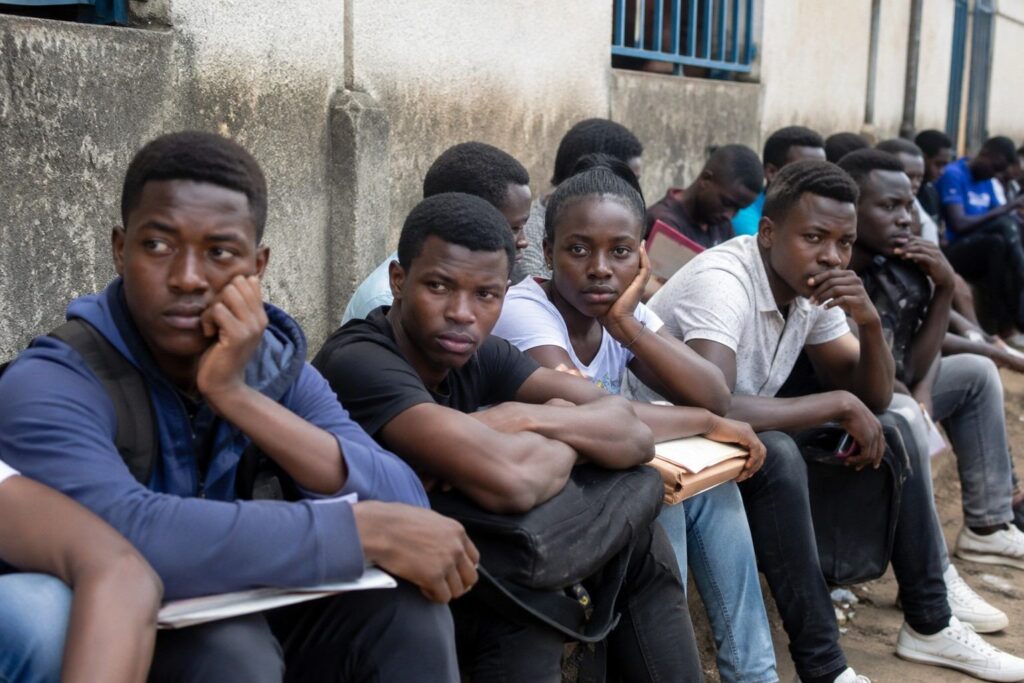
More than 877,000 people in Rwanda were unemployed in August 2026, representing 15.6% of the labour force, while the proportion of people in employment fell for the first time since 2021, according to the latest labour force survey.
Data from the National Institute of Statistics of Rwanda (NISR) show that the unemployment rate rose by 2.2 percentage points compared with August 2025, when it stood at 13.4%.
Of Rwanda’s 8,808,239 people of working age, 5,630,632, equivalent to 63.9%, were in the labour force. The remaining 36.1% were outside the labour force, including subsistence farmers, older people, students and persons with disabilities.
Among those in the labour force, 4,752,916 people, representing 54%, were employed, while 877,716, or 15.6%, were unemployed.
The previous figures, released in May 2026, showed that approximately 729,000 people were unemployed, accounting for 13.4% of the labour force. The latest data therefore point to a significant increase in unemployment.
Youth and women face higher unemployment
Unemployment was particularly high among young people aged 16 to 30, at 18.8%, compared with 13.1% among older people.
Women were also more affected than men, with an unemployment rate of 18.3%, compared with 13.3% among men.
Employment rates showed a similar gap. Only 52.8% of young people were employed, compared with 54.8% of older people. Among men, 63.3% were employed, while the rate for women stood at 45.6%.
People living in urban areas had a higher employment rate, at 61.6%, compared with 50.5% in rural areas.
However, unemployment was more prevalent in rural areas, where 16% of the labour force was unemployed, compared with 14.8% in urban areas.
Services sector provides most jobs
The services sector accounted for the largest share of employment, followed by agriculture and industry.
According to the survey, services employed 45.6% of all employed people, while agriculture accounted for 34.2% and industry for 20.2%.
The rise in unemployment coincided with a decline in the overall employment rate. In 2025, 57% of Rwanda’s working-age population was employed. By August 2026, the rate had fallen to 54%, marking the first decline since 2021 after several years of steady growth.
The employment rate stood at 41% in 2021, rose to 46.4% in 2022 and reached 49% in 2023. It increased further to 54.3% in 2024 before peaking at 57% in 2025.
Meanwhile, Rwanda’s unemployment rate had declined from 15.3% in 2024 to 13.4% in 2025 before rising again in 2026.