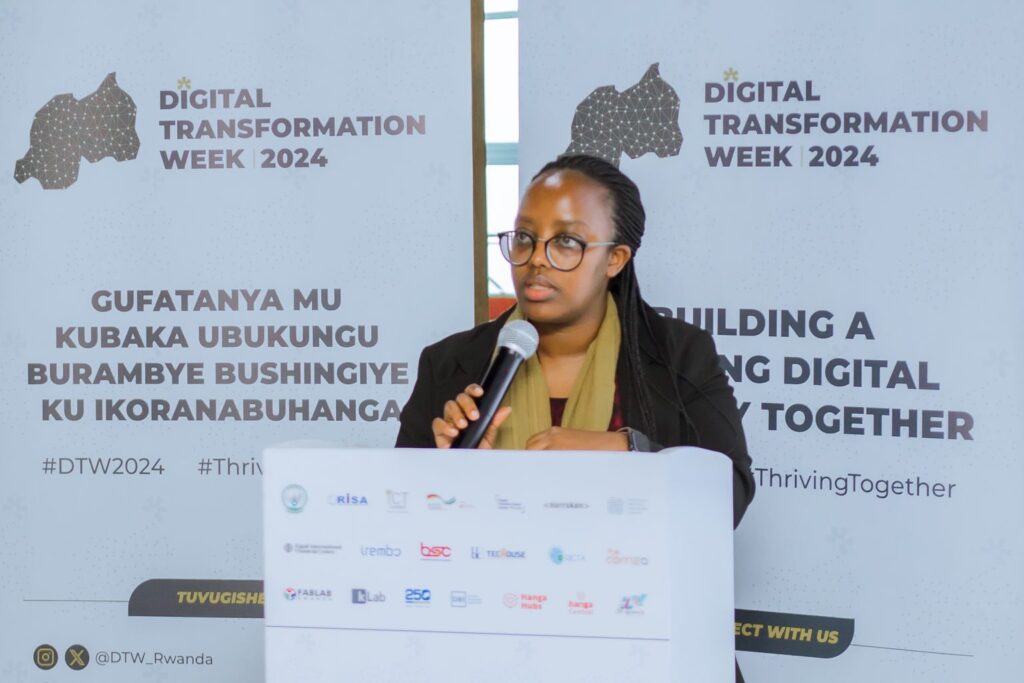
Kinyarwanda ranks fourth globally among languages with substantial collections of text and voice data available for developing artificial intelligence (AI), according to Esther Kunda, Director General for Innovation and Emerging Technologies at the Ministry of ICT and Innovation (MINICT).
Speaking to Royal FM, Kunda attributed the achievement to efforts to collect Kinyarwanda language data since 2018, involving contributions from citizens and various institutions.
The datasets include spoken words and sentences paired with written transcripts, which can be used to train AI systems to recognise speech, understand language and respond in Kinyarwanda.
“One of the exciting things we have achieved is that Kinyarwanda is among the languages with a large amount of collected data. Since 2018, citizens and institutions have contributed to collecting this data. Globally, our language now ranks fourth in terms of the amount of data available,” Kunda said.
She said the availability of such data is important for improving AI systems’ ability to understand and respond in Kinyarwanda, rather than relying primarily on other languages when interacting with users.
“The abundance of this data makes it easier to integrate Kinyarwanda into different AI tools, enabling them to respond to you in Kinyarwanda,” she said.
Kunda encouraged users of AI platforms such as ChatGPT and Claude to interact with them in Kinyarwanda and assess how their ability to understand and respond in the language has improved.
She noted that the performance of these tools in Kinyarwanda had changed considerably compared with three years ago.
“If you used them three years ago, you may notice improvements in how well they use Kinyarwanda,” she said.
How voice datasets support AI development
Voice datasets consist of recordings of people speaking words or sentences, accompanied by written transcripts of what they said. They help train and evaluate technologies used for speech recognition, converting speech into text and generating spoken responses.
For example, when someone asks an AI assistant in Kinyarwanda about the weather in Kigali, a system trained on sufficient, high-quality language data may be better equipped to recognise the request, interpret it and respond in the same language.
Such datasets can also support the development of digital services, educational tools and information platforms that people can use without first learning a foreign language.
Projects undertaken in Rwanda have also highlighted the importance of collecting Kinyarwanda data to advance speech-based technologies.
A report published by Digital.Global, a platform covering digital development initiatives, says a project implemented in partnership with Digital Umuganda and the Mozilla Foundation contributed more than 2,400 hours of Kinyarwanda voice recordings, of which more than 2,000 hours had been validated.
The data is available through Mozilla Common Voice, a crowdsourced platform that collects voice recordings and text in multiple languages. Researchers and developers can use it to build and improve speech-recognition tools for Kinyarwanda and support research into other languages.
Expanding such resources could help make AI technologies more accessible to Kinyarwanda speakers, although the quantity of available data alone does not establish how accurately every AI system understands or responds in the language.