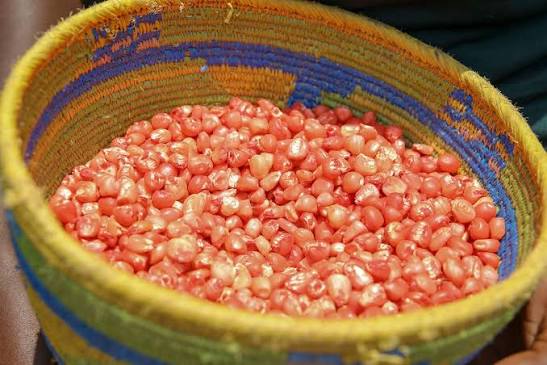
Rwanda is turning to private businesses to address shortages of quality seeds, as farmers struggle with varieties that deliver poor yields, fail to resist diseases or are unsuitable for local soil conditions.
The Ministry of Agriculture and Animal Resources (MINAGRI) says stronger private-sector involvement in multiplying and distributing improved seeds will be critical to ensuring farmers can access varieties developed through research.
The issue was raised by members of parliament who reported challenges affecting several crops, particularly maize and rice, during field visits to assess efforts to increase agricultural production.
Agriculture Minister Dr Telesphore Ndabamenye addressed the concerns on October 27, saying research was ongoing to develop improved varieties adapted to different parts of the country, but that research institutions alone could not meet farmers’ seed needs.
Lawmakers said some seeds sold by agricultural input dealers fail to deliver expected yields, while supplies of basic rice seed from the Rwanda Agriculture and Animal Resources Development Board (RAB) remain inadequate.
They also questioned whether farmers receive sufficient information to help them select varieties suited to their soils and capable of withstanding diseases and changing climatic conditions.
Ndabamenye cited progress in cassava research, saying two varieties had completed the research process and were being prepared for multiplication before distribution to farmers.
“We are continuing research to develop improved seed varieties that are not obsolete and can withstand diseases. We have done this with cassava, and two varieties have now completed the research process. We want to plant them in our regular fields, multiply them and then distribute them to farmers for use,” he said.
He said involving private businesses in multiplying and distributing improved varieties would provide a more sustainable response to seed shortages.
“The sustainable way to address seed shortages is to involve the private sector, with one stage of the process taking place through research before the results are transferred to private businesses. We are beginning to see this approach work,” he said.
Beyond seed availability, lawmakers raised concerns that findings from soil research were not reaching all farmers, limiting their ability to select appropriate fertilisers and other agricultural inputs.
The minister said research conducted in 2024 assessed soil nutrient levels and deficiencies, with the aim of matching fertiliser recommendations to the crops grown in different parts of the country.
He added that fertiliser formulated according to soil conditions had started reaching farmers through the government’s agricultural input subsidy programme during the 2027A cropping season, with 600 tonnes already distributed.
The government hopes that combining soil-specific fertiliser recommendations with improved seeds will help farmers raise productivity and make better use of agricultural inputs.
The challenges come amid concerns about domestic food production failing to keep pace with demand, contributing to pressure on market prices.
Ndabamenye acknowledged that food prices had risen, partly because changing weather conditions had reduced harvests in some areas.
He said the ministry had intensified efforts to promote proper land preparation and increase yields per hectare, including through demonstration plots where farmers can learn improved farming practices.
The effectiveness of these measures will depend partly on whether improved seeds and suitable fertilisers become more widely available to farmers and translate into higher, more reliable harvests.