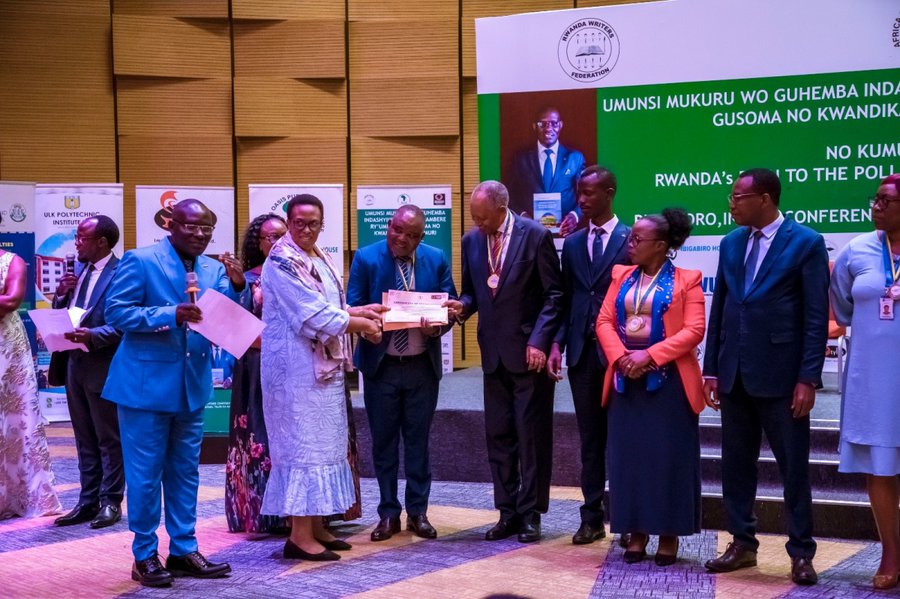
Rwanda is set to host the 2026 African Writers’ Day celebrations in Kigali on November 7, bringing together writers and other stakeholders in the book industry to recognise the contribution of African authors to preserving history, promoting culture and sharing knowledge.
The event is being organised by the Rwanda Books Industry Association in partnership with the Rwanda Writers Federation.
It is expected to attract writers, researchers, publishers, booksellers, teachers, students, representatives of public and private institutions, as well as delegates from the Pan African Writers Association (PAWA).
The celebrations will recognise writers from Rwanda and other African countries whose work has contributed to education, research, cultural preservation and knowledge sharing. Participants will also have an opportunity to exhibit their books and discuss the ideas and messages behind their publications.
The event will coincide with the Kigali International Book Fair, which will bring together authors, publishers, booksellers, schools and universities to showcase a wide range of publications.
The book fair is expected to provide writers with opportunities to promote their work, interact with readers and establish partnerships with stakeholders who can help bring their books to market.
Richard Hategekimana, President of the Rwanda Books Industry Association, said the celebrations would provide an opportunity to recognise the work of writers and encourage Africans to document their own history for future generations.
“Celebrating African Writers’ Day is an important opportunity to appreciate the work of writers, recognise their contribution and strengthen efforts to promote writing about Rwanda and Africa. Africa needs its history, values, knowledge and aspirations to be documented and passed on to young people and future generations,” he said.
He noted that Rwandan writers had a wide range of subjects to explore, including the country’s history, education, governance, economic development, technology, national unity, youth empowerment and women’s contribution to development.
“As writers, we have a lot to write about Rwanda. We have our history, the country’s journey and the development changes taking place across different sectors,” he said.
Hategekimana also commended President Paul Kagame for his role in the country’s development journey, saying writers had a responsibility to document contemporary events so that future generations could understand the period.
“We appreciate President Kagame for his leadership and contribution to the country’s journey. This gives us a responsibility to document what we are witnessing today so that it can be preserved and made available to present and future generations,” he said.
He concluded by emphasising that books about Rwanda should be grounded in research and credible evidence to provide reliable information to readers both at home and abroad.