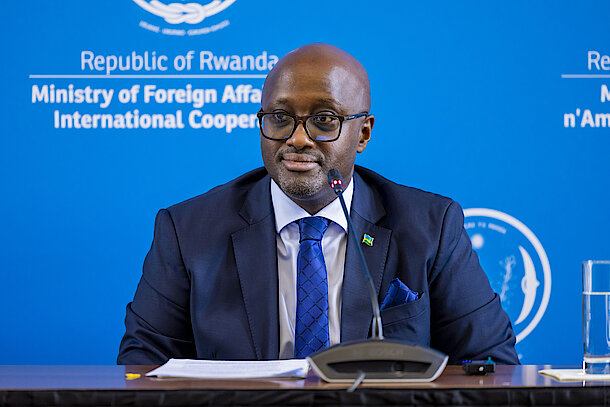
Rwanda will not allow any country, regardless of its economic or political power, to dictate its decisions, Foreign Affairs Minister Olivier Nduhungirehe has maintained, amid growing diplomatic pressure over the race for the leadership of the International Organisation of La Francophonie (OIF).
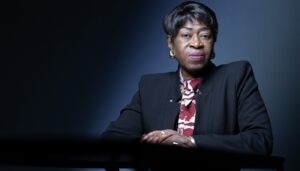
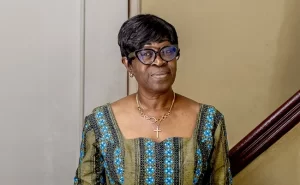
Nduhungirehe made the remarks in an interview with Rwanda Broadcasting Agency (RBA), following reports that Rwanda had been asked to withdraw Louise Mushikiwabo’s candidacy for a third term as OIF Secretary-General.
He acknowledged that such a request had been made but argued that it had no basis in the organisation’s rules, which guarantee equal rights to member states.
“Rwanda is not a country that can be dictated to by another country, regardless of how wealthy it may be,” he said.
The minister maintained that the OIF leadership contest should be governed by the organisation’s established procedures rather than pressure from individual member states.
He said members should first seek consensus on a candidate, but proceed to a vote if no agreement is reached.
“What we need to do is seek consensus, as the rules provide. If that is not possible, we will go to an election,” he said.
Nduhungirehe argued that the notion that one country could determine decisions for all other members belonged to the past, stressing that the OIF now operates under clear rules that apply equally to all member states.
Nduhungirehe cites 2014 leadership contest
To illustrate Rwanda’s position, the minister recalled the 2014 OIF summit in Dakar, Senegal, where then-French President François Hollande backed a candidate who went on to become Secretary-General, despite three other candidates having been nominated by African countries.
He argued that the organisation should move away from such practices and follow its established procedures for selecting its leadership.
His remarks come as the Democratic Republic of Congo (DRC) announced on November 14 that it had withdrawn Juliana Amato Lumumba from the race and endorsed Dacian Cioloș, Romania’s former Prime Minister.
The move followed reports that French President Emmanuel Macron had asked Rwandan President Paul Kagame to withdraw Mushikiwabo’s candidacy in favour of Cioloș. Rwanda rejected the reported proposal.
Mushikiwabo also told TV5MONDE that she intended to remain in the race until the end.
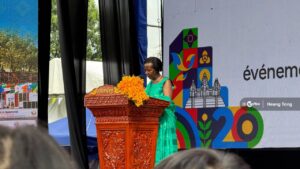
The election is scheduled for November 16, during the 20th OIF Summit of Heads of State and Government in Phnom Penh, Cambodia. The new Secretary-General will serve the 2027–2030 term.
The organisation has 90 member states and governments, comprising 53 full members, five associate members and 32 observers. Only the 53 full members have voting rights.
Under OIF rules, member states first seek consensus on a candidate. If they fail to reach an agreement, an election is held, with the candidate receiving the highest number of votes declared the winner.