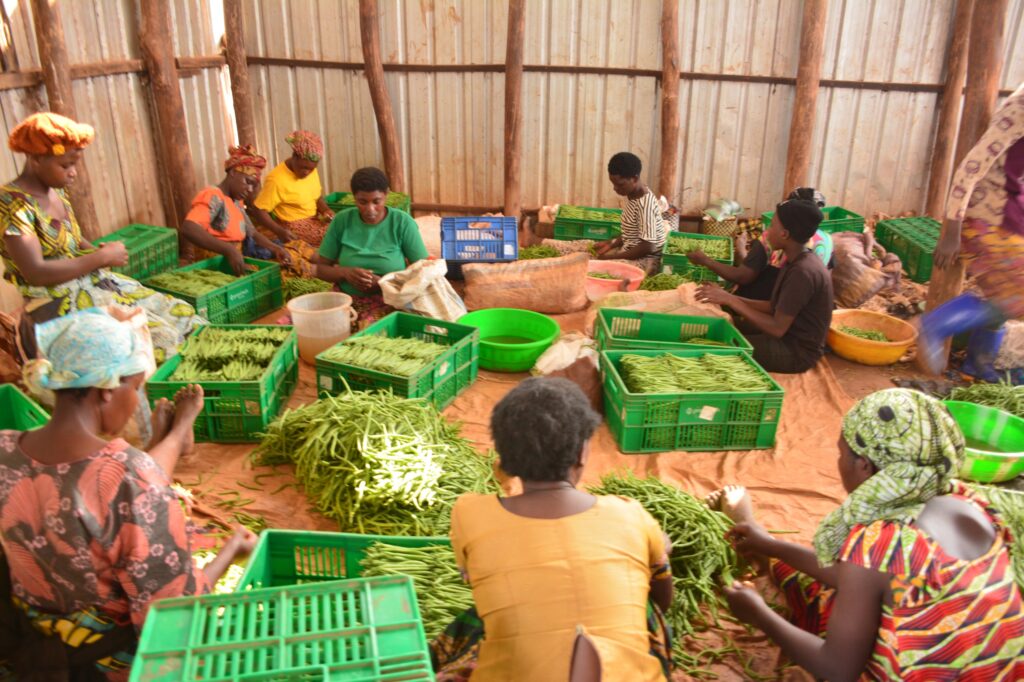
Agricultural produce continues to go to waste before reaching markets, leaving farmers with financial losses and reducing food supplies. However, some farmers are yet to embrace post-harvest preservation services, including cold storage and proper warehousing, which could help reduce these losses.
Sabine Marie Rose, Chief Executive Officer of Green Energy Technology Ltd (GET), said some Rwandan farmers still do not fully understand the importance of cold storage, contributing to the loss of produce before it reaches the market, despite the availability of solutions to prevent it.
She made the remarks on November 20, 2026, during the conclusion of a competition in Kigali to select a startup that will represent Rwanda at the 2027 Africa Startup Congress, bringing together young entrepreneurs from 10 African countries from February 24 to 26, 2027.
Her venture focuses on preserving agricultural produce through cold storage, warehousing and transportation. It emerged as the top project among 100 submissions by young Rwandan entrepreneurs and will compete against startups representing nine other African countries at the continental event.
Marie Rose said that although her company’s services help farmers preserve their produce, the number of regular users remains relatively low because some farmers have yet to appreciate the benefits of cold storage in preventing losses before products are sold.
“Today, we work with 20 large-scale individual farmers, five large cooperatives and 20 businesses dealing in agricultural produce. Those are our regular clients, although we also work with others occasionally. As you can see, the numbers are still small,” she said.
She explained that cold storage can help reduce losses caused by spoilage by extending the period during which farmers can keep their produce and giving them more time to find markets, rather than being forced to sell quickly for fear that it will go bad.
Marie Rose said being selected among the 10 startups that will represent their respective countries at the African competition presents an opportunity to expand her business and extend cold-storage services to farmers across all districts of Rwanda.
She added that winning the continental competition could enable her venture to create up to 4,000 jobs in different parts of the country, while supporting agricultural development, reducing post-harvest losses and improving the livelihoods of those involved.
Post-harvest food losses remain a major challenge for the agricultural sector, denying farmers returns that reflect the amount they produce and reducing the volume of food that reaches consumers.
In June 2025, the Ministry of Agriculture and Animal Resources reported that approximately 30 per cent of agricultural produce was lost in the fields due to inadequate storage facilities.
Ten startups to compete at Africa Startup Congress
The Africa Startup Pitch Competition is being held in 10 countries, with each selecting one outstanding venture to represent it in the final round in Kigali.
The participating countries are Rwanda, Kenya, Uganda, Nigeria, Ghana, South Africa, Botswana, Zimbabwe, Cameroon and the Republic of Congo.
The winner of the final competition is expected to receive $100,000, equivalent to more than RWF 150 million, to support business expansion and strengthen its competitiveness.
Economist Kalisa Jean Bosco, a member of the judging panel, said the startups competing in Rwanda demonstrated strong potential, offering solutions to various challenges facing communities and creating opportunities for employment.
He noted that although all the projects had the potential to advance to the next stage, the winning venture stood out for its ability to address pressing community needs.
“All the competing projects were good and had the potential to progress to the next stage. However, the projects presented in Rwanda stood out because they offered several solutions, including creating jobs for young people, fighting diseases and using technology to address climate change,” he said.
Kalisa described the cold-storage venture as particularly important because it could complement government efforts to tackle food losses at a time when Africa’s food production remains insufficient to meet the needs of its population.
He said the judges did more than score the competing projects, also advising entrepreneurs on how to improve their business models and strengthen their chances of competing internationally.
Participants also received support to refine their pitch decks — concise presentations designed to communicate a business idea to potential investors. These typically include key figures, performance indicators, achievements and the venture’s background to demonstrate its potential and vision.
Kalisa also highlighted governance as one of the major challenges affecting startups and businesses across Africa. He noted that some ventures secure funding or investment but later face disagreements between founders and the people who helped them access that support, slowing their growth.
He emphasised that sound governance, adequate knowledge and skills, and clearly defined responsibilities are essential for businesses to grow, become profitable and remain sustainable, noting that technology alone cannot guarantee business success.
Africa Startup Congress seeks to connect entrepreneurs with investors
Gilbert Ewehmeh, Chief Executive Officer of Accelerate Africa, the organisation behind the Africa Startup Congress and the competitions, said the event is more than a platform for startups to compete. It is also intended to prepare emerging African businesses to grow and compete internationally.
He said the initiative aims to raise the profile of promising startups across the continent, strengthen their capacity and connect them with investors and key international partners.
The 2027 Africa Startup Congress will take place in Kigali from February 24 to 26, bringing together entrepreneurs, investors, technology experts and other stakeholders working to advance business and innovation across Africa.