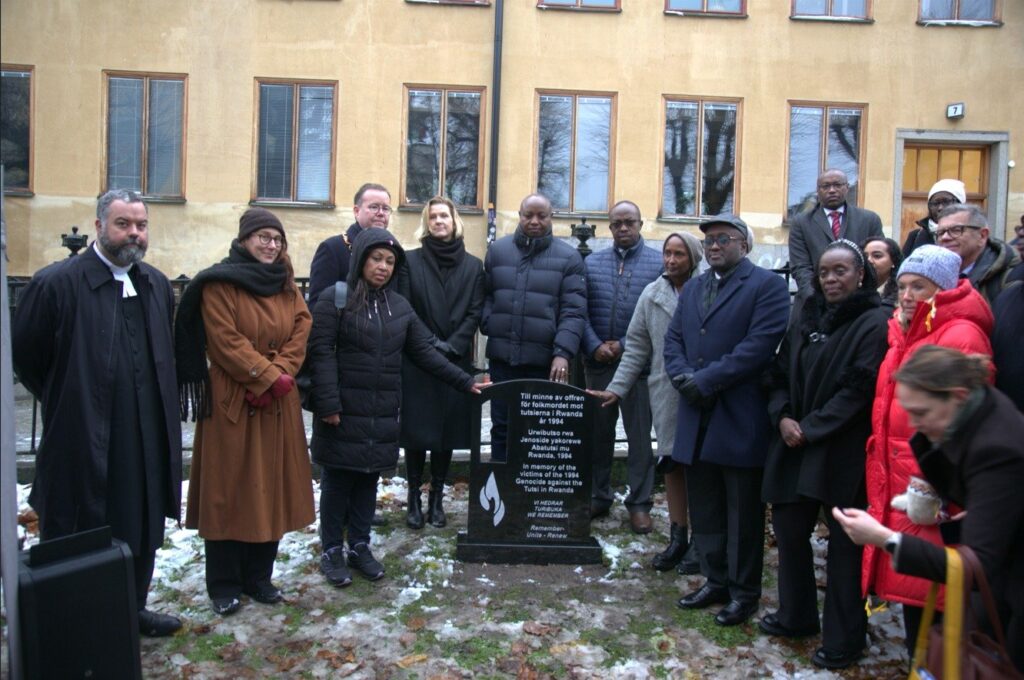
Rwanda’s Minister of Foreign Affairs, Olivier Nduhungirehe, has commended Sweden for its more than 30 years of partnership with Rwanda, saying a memorial to the 1994 Genocide against the Tutsi unveiled in Stockholm will help preserve its history and pass it on to future generations.
He made the remarks on Saturday, November 21, 2026, during the official unveiling of the memorial in Stockholm, Sweden.
The ceremony brought together Swedish officials from various institutions, diplomatic representatives, Genocide survivors and members of the Rwandan community living in the country.
Nduhungirehe described the memorial as a significant gesture for Rwanda, Genocide survivors and all those who value human life. He said it would provide a place to remember the more than one million people killed during the Genocide because of their identity.
He thanked the Swedish Government, St. Magdalena Church, the City of Stockholm, Ibuka Sweden and all others who contributed to establishing the memorial.
He added that the memorial was not only intended to honour the victims but also reflected solidarity with survivors and a commitment to preserving the truth about the events that unfolded in Rwanda in 1994.
Nduhungirehe also paid tribute to Genocide survivors living in Sweden, noting that despite the immense pain of losing their loved ones, they had shown courage in rebuilding their lives and contributing to the development of their host country.
He further commended Sweden for its support to Rwanda in the years following the Genocide, when the country faced the enormous task of rebuilding itself.
For more than three decades, he said, Sweden had remained a partner in Rwanda’s efforts to pursue justice, hold perpetrators accountable and promote reconciliation.
“True friendship is often said to be demonstrated in times of hardship. Over the years, Sweden has shown that it is a true friend of Rwanda,” he said.
He expressed hope that the memorial would serve as a legacy for future generations and become a place for remembrance, reflection and learning, helping visitors understand the devastating consequences of genocide and their responsibility to prevent such atrocities from happening again.