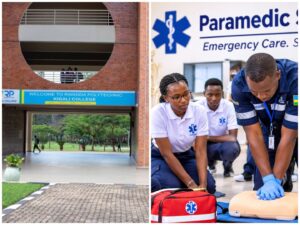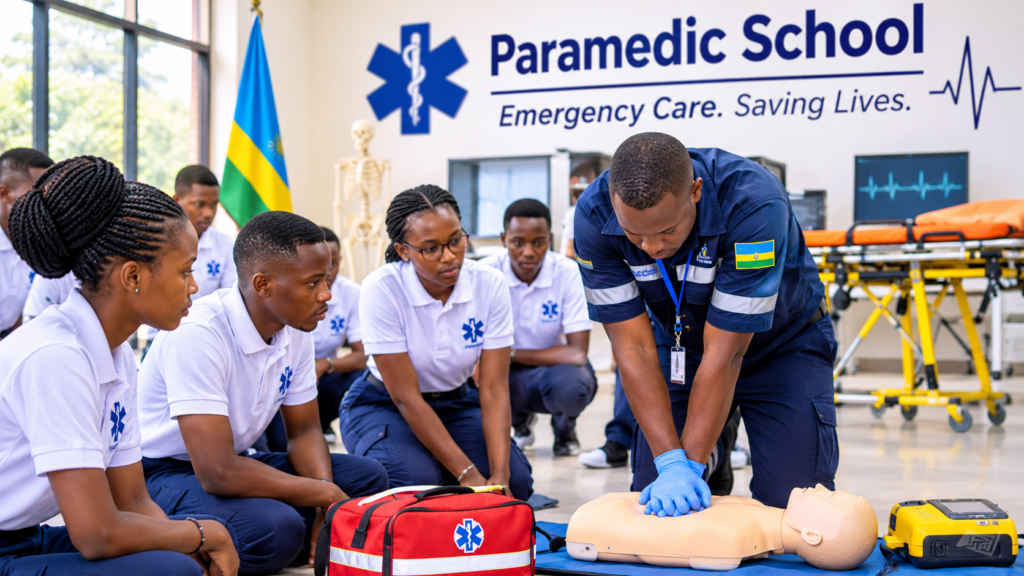
Rwanda is stepping up efforts to strengthen emergency medical services, with plans to establish its first specialised training school for emergency medical responders. The institution will admit 100 students annually, who will graduate with diploma qualifications.
The school will be part of a major reform programme aimed at improving emergency medical services (EMS), which the Ministry of Health began implementing last week to ensure people receive timely assistance during medical emergencies.
Students will receive specialised training in rescuing people in critical situations, providing care before they reach hospital and supporting patients during transportation. The initiative aims to increase survival rates and reduce complications caused by delays in receiving medical attention.
Health Minister Dr Sabin Nsanzimana said the reforms are intended to increase the number of qualified emergency medical personnel, with a target of having six trained responders in every ambulance by 2030.
The Ministry of Health officially launched the programme on Sunday, November 22, 2026, during the country’s Car Free Day campaign, which promotes physical exercise and public health.
One of the programme’s key targets is to reduce ambulance response times to 10 minutes in Kigali and 20 minutes in other parts of the country.
Currently, ambulances reach patients in Kigali within 15 minutes, down from 43 minutes in 2023. In other provinces, the average response time has fallen to 45 minutes from two and a half hours three years ago.
Dr Nsanzimana said Rwanda also aims to have one ambulance for every 20,000 people by 2030. The plan includes increasing the number of specialised ambulances for newborns, patients with infectious diseases and those requiring mass transportation.
In addition to ambulances, the country will use motorcycles, boats and aircraft to deliver emergency medical assistance, depending on people’s locations and the nature of their needs.
Technology will also play a key role in the reforms. Ambulances will be monitored in real time using GPS through the eBanguka system, while artificial intelligence will help emergency responders make decisions and improve service delivery.
To strengthen emergency response capacity within healthcare facilities, staff from 69 health centres and hospitals will receive basic emergency medical training to improve their ability to assist patients facing critical health conditions.
Rwanda also plans to train 2,000 people from different communities in basic first aid so they can provide immediate assistance to people in danger before medical professionals arrive.
The training will begin in Kigali, targeting police officers, motorcycle taxi operators and market traders, equipping them with basic skills to respond to medical emergencies.
The programme seeks to reinforce the principle that emergency care should not begin only when patients reach hospitals, but rather at the scene of an incident, ensuring timely assistance and improving their chances of survival.