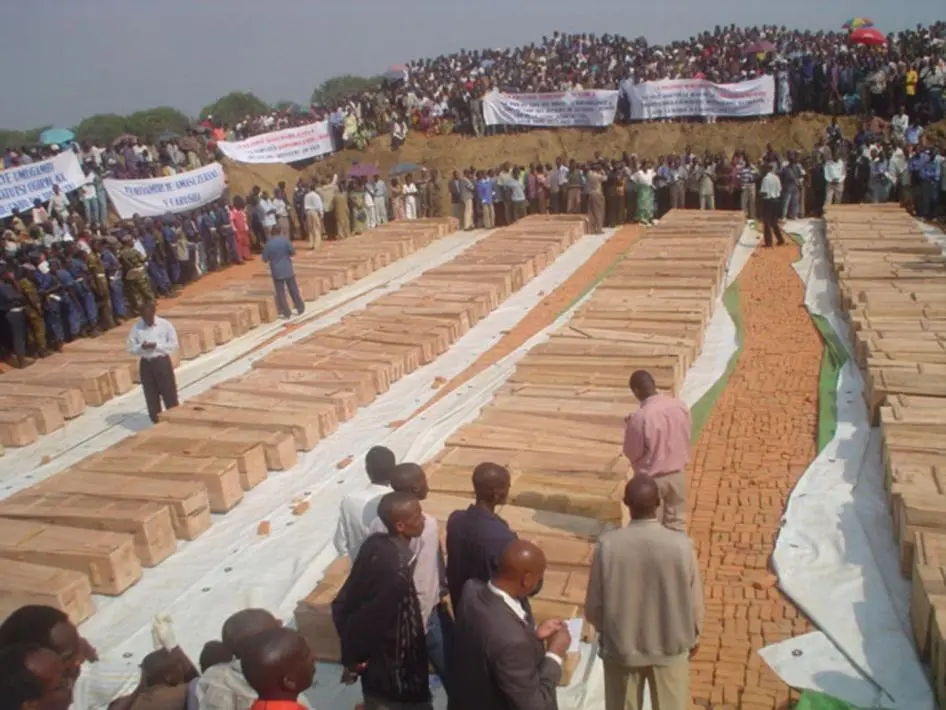
The Banyamulenge community in Rwanda has marked the 22nd anniversary of the Gatumba massacre, renewing calls for justice for the victims and urging the international community to take stronger action against violence targeting communities in eastern Democratic Republic of Congo (DRC).
The commemoration was held in Kigali on Thursday, August 13, 2026, under the theme: “Remember, seek justice and condemn genocide ideology that continues to manifest in the Democratic Republic of Congo.”
The event brought together members of the Banyamulenge community and others to remember the Congolese refugees killed at Gatumba refugee camp in western Burundi on August 13, 2004.
According to accounts cited by humanitarian and human rights organisations, 166 Congolese refugees, most of them Banyamulenge, were killed in the attack.
Speakers at the Kigali commemoration criticised the lack of accountability more than two decades after the massacre and called on the international community to give greater attention to the victims and survivors.
“We call on the international community to give due recognition to the victims of the Gatumba massacre and others who continue to be killed every day,” organisers said.
The event also focused on the security situation in eastern DRC, with participants expressing concern about continued violence and displacement affecting Banyamulenge communities in South Kivu.
They called for greater protection of civilians, accountability for perpetrators and efforts to prevent ethnic hatred and violence in the region.
Survivors still seeking justice
The Gatumba massacre occurred on the night of August 13, 2004, when armed attackers raided a refugee camp near the Burundi-DRC border. The camp housed Congolese refugees who had fled conflict in eastern DRC.
The Forces for National Liberation (FNL) claimed responsibility for the attack at the time, while subsequent investigations examined the circumstances surrounding the killings and the identities of those responsible.
The Gatumba Refugees Survivors Foundation says survivors have pursued legal avenues seeking accountability for those responsible.
More than two decades later, however, survivors continue to demand justice.
The Kigali commemoration therefore served not only as a remembrance of the victims but also as a renewed appeal for accountability and stronger protection of communities affected by conflict in the Great Lakes region.
Participants said remembering Gatumba should be accompanied by efforts to prevent similar violence from occurring again.