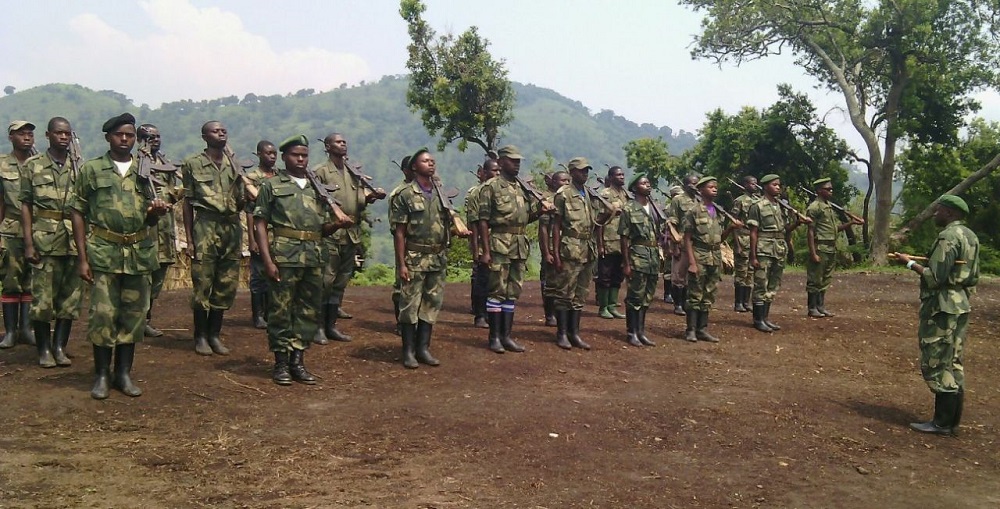
A United Nations report has revealed that the Democratic Forces for the Liberation of Rwanda (FDLR) has fragmented into three main factions, a restructuring that experts say has enabled the armed group to maintain its operations while disguising its command structure in eastern Democratic Republic of Congo (DRC).
The report by the UN Group of Experts on the DRC, submitted to the Security Council, provides an assessment of armed groups operating in eastern DRC and identifies FDLR as an ongoing security concern despite a decline in its strength compared with previous years.
According to the report, FDLR continues to recruit new fighters, impose forced taxation on communities in areas under its influence, and cooperate with other armed groups in military activities.
The experts identify three main components of the group: FDLR-FOCA (Forces Combattantes Abacunguzi), FDLR-RUD (Ralliement pour l’Unité et la Démocratie), and FDLR-FPP (Front Populaire pour la Paix).
The report identifies Pacifique Ntawuguka, also known as General Omega Israel, as the military commander of FDLR-FOCA, while Lieutenant General Gaston Iyamuremye, known as Victor Byiringiro, remains the political leader of FDLR.
It further names Brigadier General Emmanuel Nsengiyumva, alias Faida Hakimu, as the leader of FDLR-RUD, and Colonel Dan Hategekimana, also known as Dan Simplice, as the head of FDLR-FPP.
Although the factions operate under separate names, the report indicates that they remain connected, with General Omega playing a key role in major decisions and negotiations involving the different branches.
FOCA remains FDLR’s largest military wing
The UN experts describe FDLR-FOCA as the group’s main military wing and the strongest faction in terms of fighters and operational capacity.
The faction is responsible for most of FDLR’s armed activities, including attacks, control of some rural areas, and cooperation with other armed groups operating in eastern DRC.
FDLR-FOCA operates mainly in North Kivu, particularly in areas including Nyiragongo, Masisi, Rutshuru, and Walikale.
FDLR-RUD emerged after internal divisions within the group’s leadership. Although smaller than FOCA, the report says it continues to conduct armed activities in parts of North Kivu, including Jomba, Binza, Busanza, and Bukoma.
FDLR-FPP, meanwhile, is described as a political wing created by former FDLR members to advance the group’s agenda through political mobilisation and advocacy while maintaining links with the wider organisation.
FDLR remains a security concern in Great Lakes region
The report states that FDLR remains one of the drivers of insecurity in eastern DRC and continues to cooperate with the Congolese army (FARDC) and some Wazalendo armed groups in operations against M23, despite international agreements and calls for such cooperation to end.
Under the Washington Peace Agreement, FDLR was expected to be dismantled. A meeting held in Washington on March 17-18, 2026 identified six locations where operations against the group were expected to be carried out, including five in North Kivu and one in South Kivu.
On March 29, 2026, FARDC announced that it had launched operations against FDLR and later deployed special forces known as “Hiboux” or “jungle battalions” from Kisangani to Walikale.
However, the UN report questions the effectiveness of those efforts, stating that despite public declarations by FARDC, some officials in Kinshasa and military commanders in eastern DRC allegedly assured FDLR that operations against the group would not take place.
The report also recalls that FDLR includes individuals linked to the 1994 Genocide against the Tutsi who fled to Congo after the genocide, and warns that the group’s continued armed activities remain a major security concern in the Great Lakes region.
Rwanda has repeatedly raised concerns over FDLR, describing it as a threat to its national security. Kigali has maintained that defensive measures will continue as long as the armed group remains active in eastern DRC.