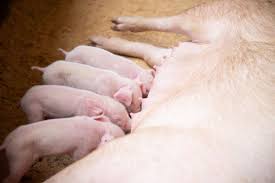
Young people in Gisagara District are increasingly turning small livestock farming into a profitable business, creating jobs for themselves and others while improving their livelihoods.
Some young entrepreneurs who invested in poultry, pig and other small livestock farming say the businesses have provided them with a reliable source of income and helped them move away from unemployment.
One of the young farmers told Rwanda Broadcasting Agency (RBA) that he used savings from construction work in Kigali to start his livestock business after returning to his rural home.
“I studied construction in secondary school and later went to Kigali, where I worked in construction and raised the capital I needed. I then returned to the countryside and started this livestock farming project,” he said.
He said the business has grown significantly, enabling him to acquire a house and a car while also creating employment opportunities for other young people.
One of the workers employed on the farm said the opportunity had helped young people earn a living and avoid engaging in harmful activities.
“Because he gave us jobs, it helped protect us from many problems, including bad habits and theft,” he said.
Gisagara District Mayor Jérôme Rutaburingoga said the district is helping young people access start-up capital through the “Kuremera” programme and urged them to make use of the opportunities available.
He said attitudes towards agriculture and livestock farming were changing, with the sectors increasingly being viewed as businesses rather than activities reserved for people without other employment options.
“In the past, we thought agriculture and livestock farming were activities undertaken by people who had failed to find other jobs, people who had not studied or had no other work. But today, it is a job in its own right,” Rutaburingoga said.
He encouraged more young people to invest in agriculture and livestock, saying the sectors offer significant opportunities and benefit from government support.
The experience of young farmers in Gisagara reflects a wider push in Rwanda to make agriculture more commercially oriented and attractive to young people. Small livestock, particularly poultry and pig farming, has been identified as a priority value chain under Rwanda’s agricultural transformation strategy.
In Gisagara, initiatives supporting small livestock farmers have also helped improve household incomes, nutrition and resilience, with youth and women among the beneficiaries.
For the young entrepreneurs involved, livestock farming is increasingly being seen not simply as a means of survival but as a business capable of generating income, creating employment and contributing to local economic development.