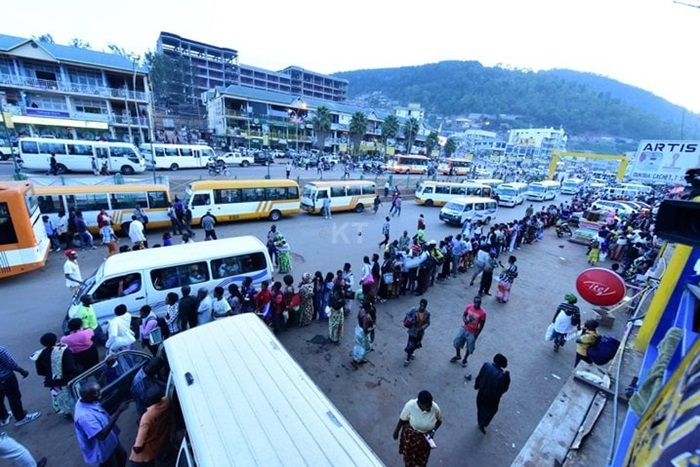
The City of Kigali aims to increase the share of daily trips made using public buses from the current 20 percent to 50 percent over the next decade as part of efforts to build a more efficient, reliable and sustainable urban transport system.
Authorities say achieving the target will require more than expanding road infrastructure or adding bus routes. Instead, the focus will be on providing dependable, consistent and passenger-centred services that encourage more residents to choose public transport.
The announcement was made by Aubin Rukera, Chief Executive Officer of Ecofleet Solutions, the state-owned company responsible for managing Rwanda’s public transport system.
Speaking to The New Times, Rukera said public transport usage has already doubled since reforms were introduced, rising from 10 percent of all daily trips in Kigali to 20 percent.
“Before the reforms, public transport accounted for just 10 percent of daily trips in Kigali. Ecofleet data now shows that this figure has doubled to 20 percent,” he said.
According to Rukera, the next milestone is to increase public transport’s share to 30 percent before reaching the long-term target of 50 percent within the next 10 years.
To achieve this, Kigali has identified three priorities: improving the reliability and consistency of public transport services, deploying digital technologies to enhance operations, and reducing operating costs.
A major reform introduced in December 2025 shifted public transport management from a model largely driven by operators’ commercial interests to one centred on passengers’ needs.
Under the new system, Ecofleet is responsible for dispatching buses across the city, monitoring route performance and ensuring service quality standards are maintained.
The government has also expanded Kigali’s public transport fleet by purchasing 190 new buses, bringing the number of operational buses to about 340. The additional buses are expected to reduce passenger waiting times, improve schedule reliability, and enhance cleanliness and overall service quality.
Ecofleet is also developing a real-time passenger information system that will allow commuters to track buses live and view expected arrival times at bus stops.
Once fully operational, the platform will enable passengers to access bus schedules through mobile phones and other digital platforms, helping them plan their journeys more efficiently, Rukera said.
The reforms also support Rwanda’s broader strategy to reduce dependence on petroleum products by accelerating the adoption of electric buses, particularly in Kigali.
Although high petrol and diesel prices continue to increase operating costs for conventional buses, Ecofleet says the transition to electric buses will play a key role in lowering costs and improving the long-term sustainability of the city’s public transport system.