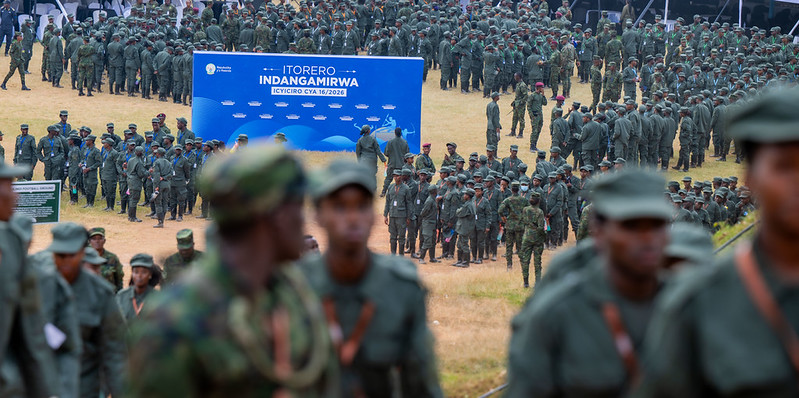
More than 700 young Rwandans participating in the 16th intake of Itorero Indangamirwa have pledged to preserve the legacy of Rwanda’s liberation struggle and uphold the values that guided the country’s journey towards peace and development.
The commitment was made on Wednesday, July 15, 2026, during their visit to the Mulindi Liberation Museum in Gicumbi District, where they learned more about Rwanda’s liberation history and the sacrifices made by the Rwanda Patriotic Army (RPA) Inkotanyi.
The visit was aimed at strengthening participants’ understanding of Rwanda’s history, particularly the liberation struggle that began on October 1, 1990, when the RPA launched its campaign to liberate the country.
At the museum, the youth were taken through the different stages of the struggle, including the reasons behind its beginning, the challenges faced by the fighters, the battles that followed, and the eventual victory that brought an end to the 1994 Genocide against the Tutsi.
They also learned about the role played by the RPA in restoring security and creating the foundation for Rwanda’s reconstruction and development.
The lessons were intended to inspire young people with values demonstrated by the liberation fighters, including courage, resilience, patriotism, sacrifice and commitment to national service.
Eric Mahoro, Permanent Secretary at the Ministry of National Unity and Civic Engagement (MINUBUMWE), said visiting historical sites is an important part of Itorero Indangamirwa, particularly because many participants were born after the Genocide against the Tutsi.
“Most of the young people in Itorero Indangamirwa were born after the Genocide against the Tutsi. This programme helps them understand the history of their country and the difficult times Rwanda went through,” Mahoro said.
He added that the participation of young Rwandans living or studying abroad is particularly valuable because it helps them understand their country’s history and distinguish facts from narratives that distort Rwanda’s past.
“Although they live abroad, Rwanda remains part of them because they are Rwandans. Coming here gives them an opportunity to understand their history, appreciate the country’s progress and become good ambassadors of Rwanda,” he said.
Participants said the visit gave them a deeper appreciation of the sacrifices made by the Inkotanyi and strengthened their commitment to contribute to Rwanda’s future while protecting the truth about its history.
Amanda Umurungi, a participant in the 16th intake of Itorero Indangamirwa, said the courage of the liberation fighters has left young people with a responsibility to continue building the nation.
“The struggle fought with guns is over. Our responsibility now is to continue building our country through the actions we take every day,” she said.
Bob Dylan Manzi said the lessons inspired him to protect the achievements secured through the sacrifices of those who fought for Rwanda’s liberation.
“I learned that those who liberated the country showed extraordinary courage. Many challenges could have discouraged them, but they remained committed and continued fighting for us. I am determined to protect what they fought for and challenge those who distort our history,” he said.
Keza Bithia, a Rwandan living in New York, said Itorero has helped her reconnect with Rwanda’s culture, values and history.
“When you live abroad, you can gradually lose touch with your culture. But being here has helped me understand what previous generations did to liberate the country. Their sacrifice inspires me to continue their work and ensure their achievements are protected,” she said.
During the visit, participants toured different sections of the museum, including the office used by President Paul Kagame during the liberation struggle, areas where military strategies were developed, and other facilities that supported the organisation of the campaign.
The experience allowed them to see historical sites and artefacts that complemented the lessons they had received about Rwanda’s liberation journey.
The 16th intake of Itorero Indangamirwa began on July 1, 2026, at the Gabiro Military Training Centre and will conclude on August 10, 2026.
The programme brings together Rwandans living or studying abroad, graduates of international secondary schools in Rwanda, outstanding participants from the 13th intake of Inkomezabigwi Civic Education Programme, and students from universities and other higher learning institutions.
MINUBUMWE says more than 5,000 young people have completed Itorero Indangamirwa since its establishment, with many alumni contributing positively to society and representing Rwanda abroad while promoting a better understanding of the country’s history.