Kigali’s Car Free Day on Sunday put a spotlight on the dangers of substandard alcoholic beverages, with participants urged to avoid drinks that fail to meet safety and quality standards.
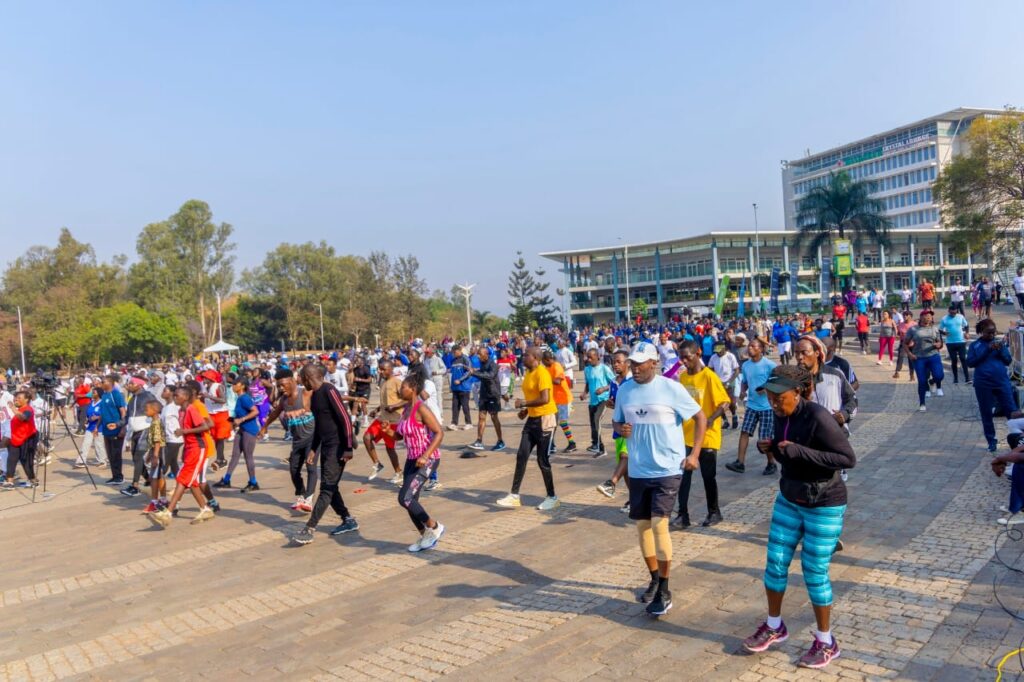
The campaign was held as thousands of Kigali residents took part in the regular mass sports activities aimed at promoting healthy lifestyles and physical fitness.
Participants were encouraged to support the “Hehe Nicyuma” campaign, which seeks to raise public awareness about the risks associated with unsafe alcoholic beverages and encourage consumers to make healthier choices.
The campaign comes as Rwanda continues a nationwide crackdown on illicit and substandard alcoholic drinks following reports of serious health consequences linked to some products.
Authorities have closed factories found producing non-compliant alcoholic beverages, removed unsafe products from the market and arrested people suspected of manufacturing and distributing them.
Car Free Day also supports cancer fight
Sunday’s activities also featured a solidarity walk aimed at raising awareness about cancer and mobilising funds to purchase a SPECT scanner.
The scanner is expected to strengthen cancer diagnosis and monitoring, helping healthcare providers assess patients and provide appropriate treatment and follow-up.
Organisers used the event to link physical fitness and disease prevention with broader efforts to promote healthy living.
Participants were encouraged to maintain healthy lifestyles while also being cautious about the products they consume.
The message against unsafe alcoholic drinks comes at a time when authorities are intensifying inspections of manufacturers and distributors to ensure that alcoholic beverages on the market meet required standards.
The government has also urged manufacturers to comply with quality and safety regulations and called on consumers to avoid drinks whose safety and authenticity cannot be established.
Through the “Hehe Nicyuma” campaign, organisers are seeking to strengthen public awareness and encourage Kigali residents to reject unsafe drinks as part of wider efforts to protect public health.