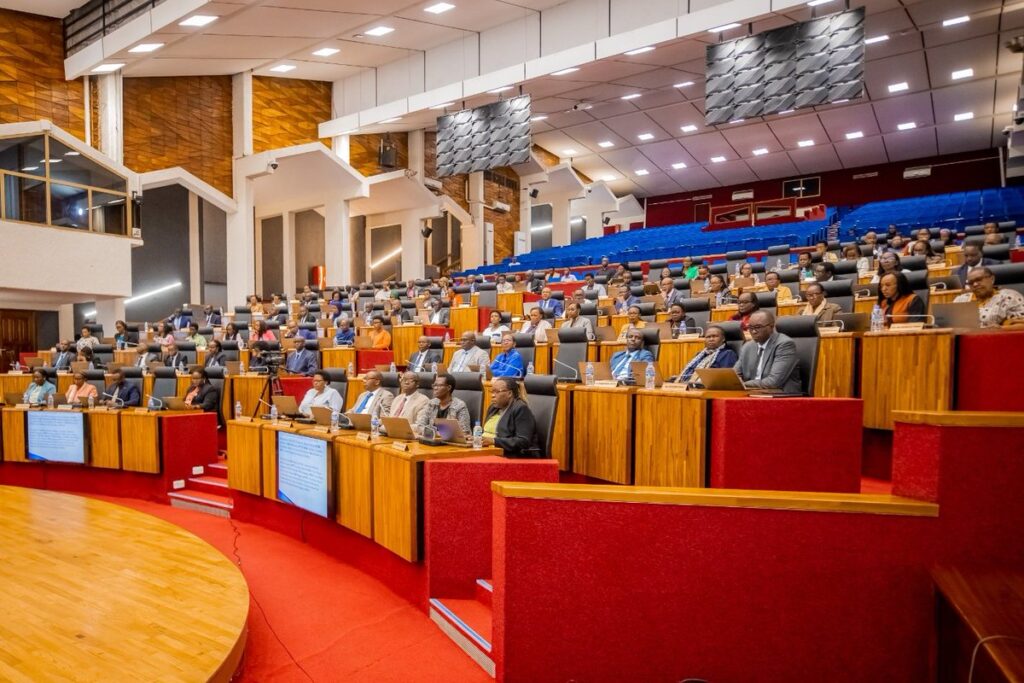
Rwanda’s Parliament has called for urgent improvements in the implementation of the country’s Labour Migration Policy, citing gaps that continue to affect citizens seeking employment opportunities abroad.
The call follows the adoption of a parliamentary report reviewing the implementation of the policy, which was introduced in 2019 to guide the movement of Rwandan workers to international labour markets.
The review, conducted by the Parliamentary Committee on Foreign Affairs, Cooperation and Security, identified several challenges, including limited implementation of labour agreements with destination countries, absence of specific regulations governing labour migration, skills gaps among job seekers and risks linked to illegal recruitment.
Lawmakers have directed the Ministry of Public Service and Labour (MIFOTRA) to present, within three months, a comprehensive plan showing how the Labour Migration Policy will be fully implemented, particularly for Rwandans seeking jobs abroad.
They also asked the Ministry of Finance and Economic Planning (MINECOFIN) to develop measures within six months to ease remittance flows from Rwandans living abroad and promote diaspora investment.
The assessment found that despite seven years since the policy was introduced, some key measures have not been fully implemented.
One of the major concerns raised was the limited use of diaspora remittances for productive investment. The report noted that money sent home by Rwandans abroad increased from US$200 million in 2020 to US$669.8 million in 2025, but investment opportunities for these funds remain limited.
Lawmakers said challenges include difficulties accessing financial and capital markets, as well as finding trusted local partners for investment.
The committee also raised concerns over the absence of licensed private recruitment agencies that were expected to support Rwandans seeking employment abroad.
The lack of such agencies has created room for informal brokers who expose job seekers to fraud, exploitation, unsafe working conditions and possible human trafficking.
The report further noted that Rwanda still lacks specific laws and regulations governing labour migration, despite the policy identifying the need for a clear legal framework.
It highlighted that organisations supporting Rwandans to secure jobs abroad continue to face challenges due to the absence of clear guidelines. For example, Zulfat Foundation and the University of Tourism, Technology and Business Studies (UTB) have helped 361 young Rwandans find employment opportunities in Qatar and the United Arab Emirates since 2019.
The review also found that Rwanda’s labour cooperation agreement with the United Arab Emirates expired in 2023 and has not yet been renewed, creating a need for a more sustainable framework for labour mobility between the two countries.
Another challenge identified was the mismatch between skills provided by some training institutions and those demanded by international employers.
MPs said stronger coordination is needed to align vocational training programmes with global labour market requirements so that more Rwandan youth can compete for overseas employment opportunities.
The report also highlighted continued risks of human trafficking and forced labour among people seeking jobs abroad through informal channels.
Citing a 2025 report by the United Nations Office on Drugs and Crime (UNODC), lawmakers noted that millions of people worldwide remain victims of forced labour, with women, girls and children among the most affected groups.
In Rwanda, the Directorate General of Immigration and Emigration reported that 289 Rwandans had been repatriated between January 2025 and the time of the assessment after facing abuse and forced labour abroad.
During the same period, 129 people were prevented from leaving the country due to suspected links to human trafficking networks, while 11 suspected traffickers were arrested from January 2026.
MPs urged relevant institutions to take coordinated action to address these challenges and accelerate the implementation of Rwanda’s Labour Migration Policy.