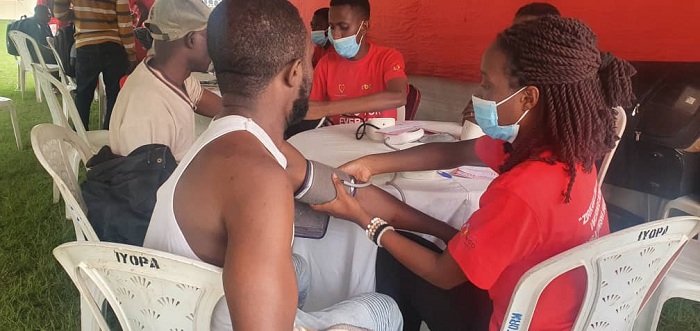
A health screening exercise in Nyaruguru District has raised concern over the growing burden of non-communicable diseases after 42% of 1,600 people tested were found with such conditions.
The findings were shared on Saturday, October 3, 2026, during activities held in Nyaruguru to mark World Heart Day and promote awareness of cardiovascular diseases.
The screening was conducted as part of a week-long campaign by the Rwanda Biomedical Centre (RBC) aimed at encouraging residents to take preventive measures, undergo regular health checks and adopt healthier lifestyles.
High blood pressure was the most common condition identified among those screened. It affected 26% of the people tested, while 0.1% were found to have diabetes. Another 5% had reached a level indicating heart disease.
The findings have renewed calls for residents to make regular health screening part of their routine, particularly as non-communicable diseases can develop gradually and may not always show clear symptoms in their early stages.
Nyaruguru District Mayor Dr. Murwanashyaka Emmanuel urged residents to avoid behaviours that can damage their health and to seek medical attention early whenever they suspect a health problem.
He also encouraged residents to embrace preventive healthcare rather than waiting until they develop serious health conditions.
Physical inactivity, unhealthy diets, excessive alcohol consumption and smoking are among the lifestyle factors associated with the rising burden of non-communicable diseases.
For some residents, regular physical activity has become an important part of efforts to stay healthy.
Mukashyaka Beatha, a Nyaruguru resident, said she exercises because she believes staying active can help prevent health problems.
“You may choose not to exercise and only start doing it as treatment after doctors advise you to following an illness. By then, it is often difficult to exercise, especially after you have already developed a health condition. I exercise and I feel that it helps me,” she said.
Dr. Ntaganda Evariste, who is responsible for cardiovascular diseases at RBC, said the growing number of younger people affected by conditions traditionally associated with older adults is particularly concerning.
“What concerns us is that these diseases are increasingly affecting people at younger ages, including those in their 50s, 40s and even younger. This is no longer simply an issue of age but of the lifestyle we lead,” he said.
He pointed to physical inactivity, prolonged sitting, obesity, excessive alcohol consumption and poor diets as some of the factors contributing to the problem.
According to national figures cited by RBC, high blood pressure affects 16.8% of the population, while heart disease affects 7% and diabetes 2.9%.
Health authorities are continuing to encourage residents to exercise regularly, eat healthier foods, avoid tobacco, limit alcohol consumption and seek regular medical checks as part of efforts to prevent and detect non-communicable diseases early.