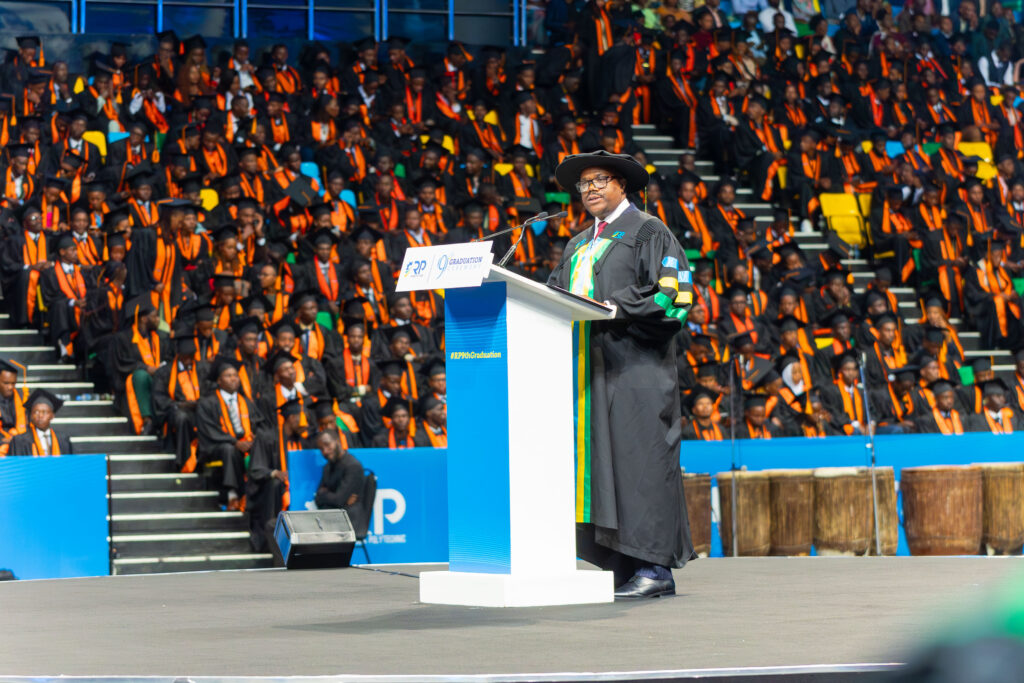
Prime Minister Dr. Justin Nsengiyumva has called on graduates of Rwanda Polytechnic (RP) to use the skills acquired during their studies to drive innovation, create jobs, and contribute to national development.
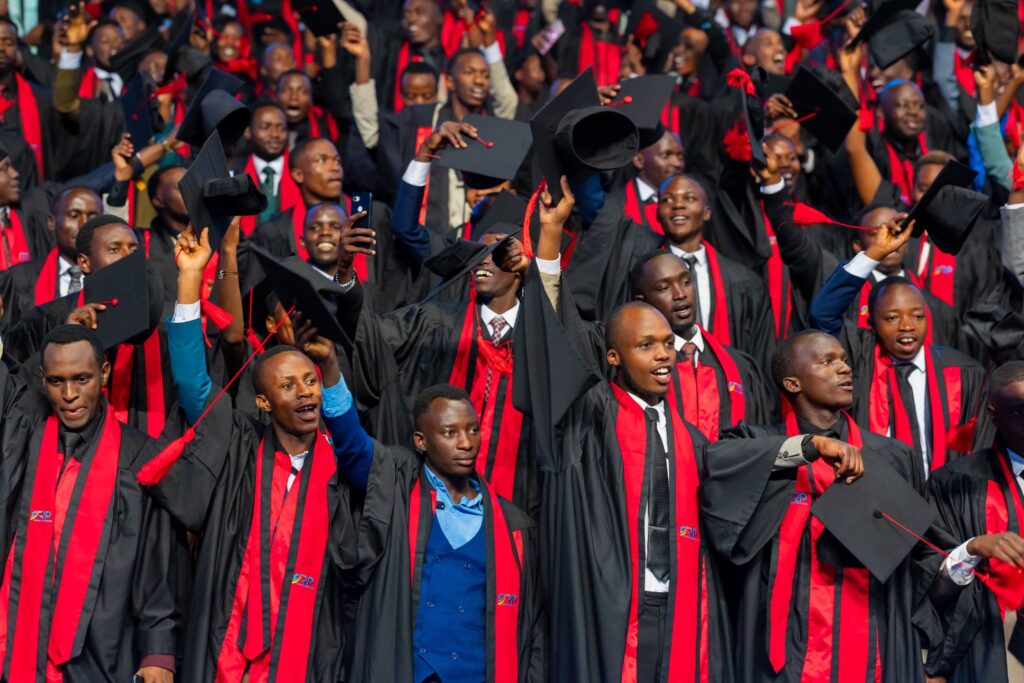
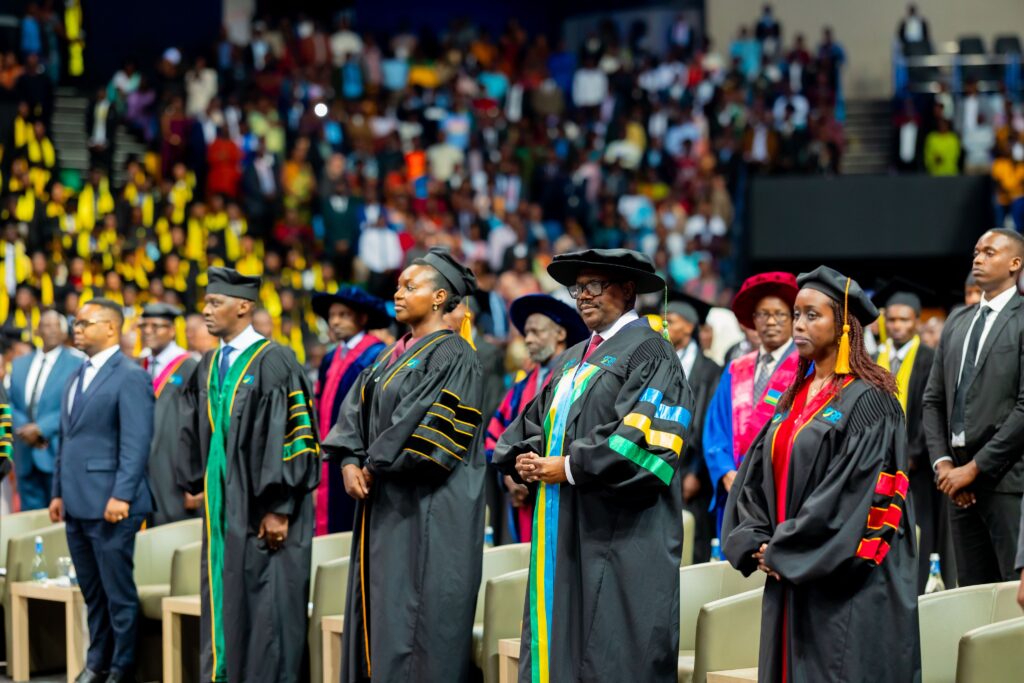
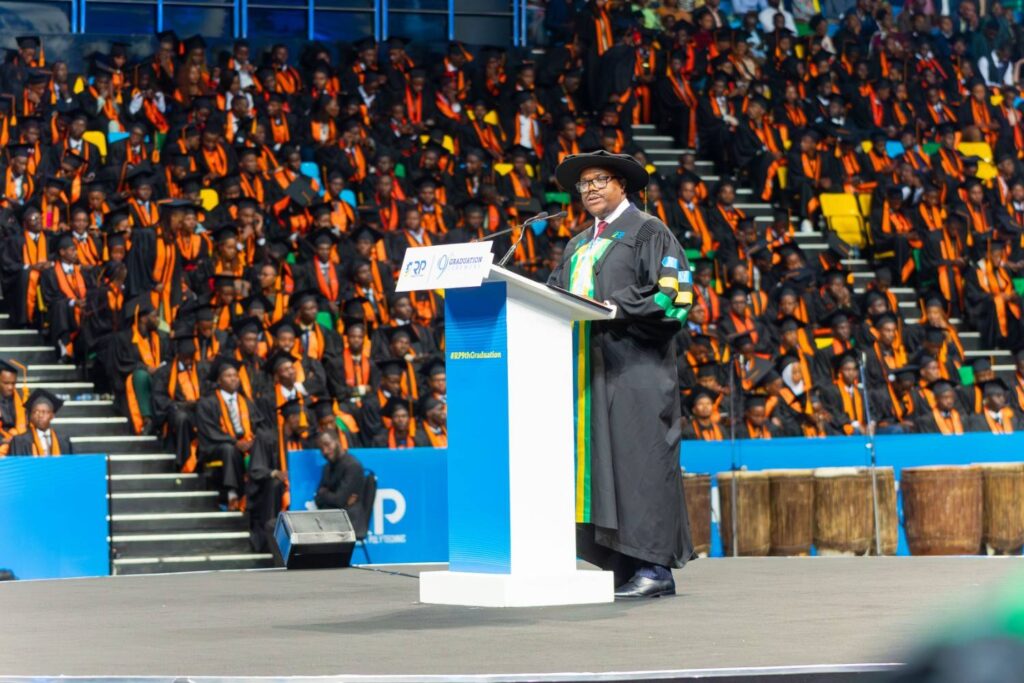
He made the remarks during a graduation ceremony held at BK Arena on Thursday, May 14, 2026, where more than 3,500 students completed their studies in different programmes.
Dr. Nsengiyumva said graduation should not be viewed as the end of an academic journey, but rather the beginning of a new phase that requires creativity, problem-solving, and entrepreneurship to address real societal challenges.
He encouraged graduates to become innovators and job creators by identifying gaps in their communities and turning them into opportunities that benefit both themselves and the wider society.
“The most successful people in the future will not necessarily be those who know the most today, but those who are willing to keep learning,” he said, underscoring the importance of continuous learning in a rapidly evolving world.
The Prime Minister also emphasized that government expects TVET graduates to play a key role in national transformation by applying their knowledge, skills, and creativity in productive sectors of the economy.
He noted that technical and vocational education institutions remain central to Rwanda’s development agenda, particularly in building a skilled workforce to support key sectors under Vision 2050.
Dr. Nsengiyumva reaffirmed government commitment to strengthening Rwanda Polytechnic through continued investment in infrastructure, equipment, and institutional capacity.
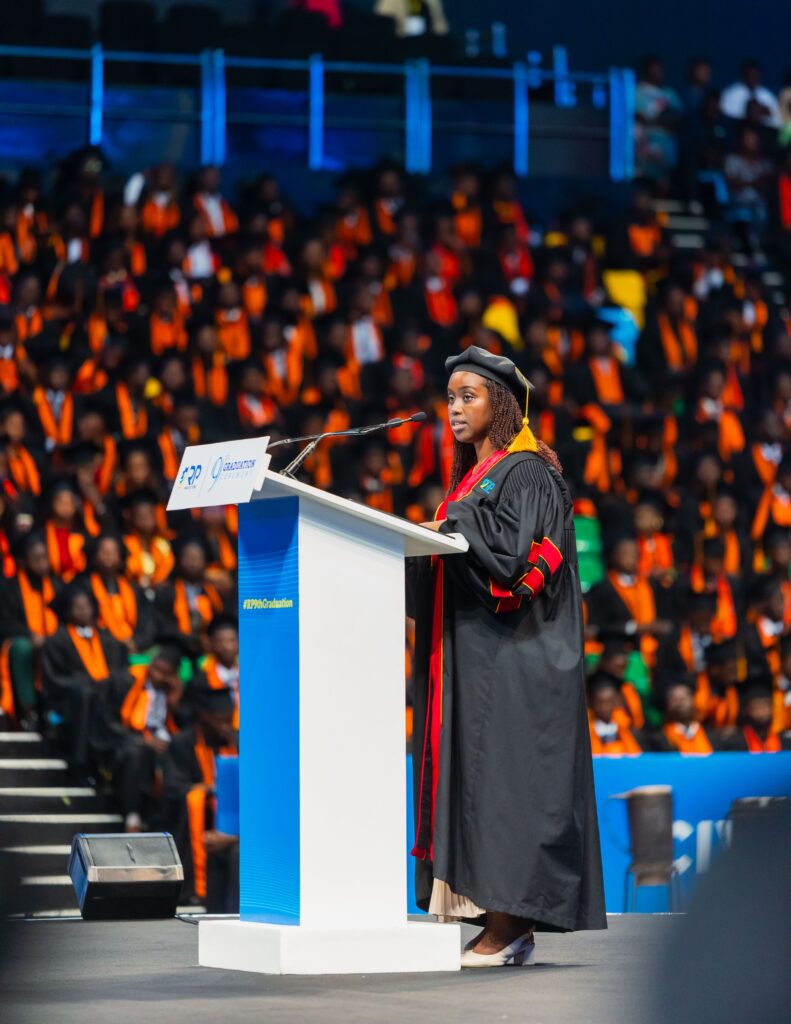
Rwanda Polytechnic Director General Dr. Sylvie Mucyo said the institution remains focused on producing graduates equipped with practical skills and innovative thinking to respond to labour market needs and societal challenges.
She added that RP continues to prioritize innovation-driven training aimed at producing problem-solvers capable of contributing to sustainable development.
A total of 3,553 students graduated, including 2,993 awarded Advanced Diplomas and 560 in Bachelor of Technology.
The graduates came from RP’s eight constituent colleges in Huye, Gishari, Karongi, Kigali, Ngoma, Kitabi, Musanze, and Tumba. Women accounted for 30.7% of the cohort, a slight increase from the previous year.
They specialized in diverse fields including construction, information technology, telecommunications, electrical engineering, tourism, hospitality, and other technical disciplines aligned with national development priorities.