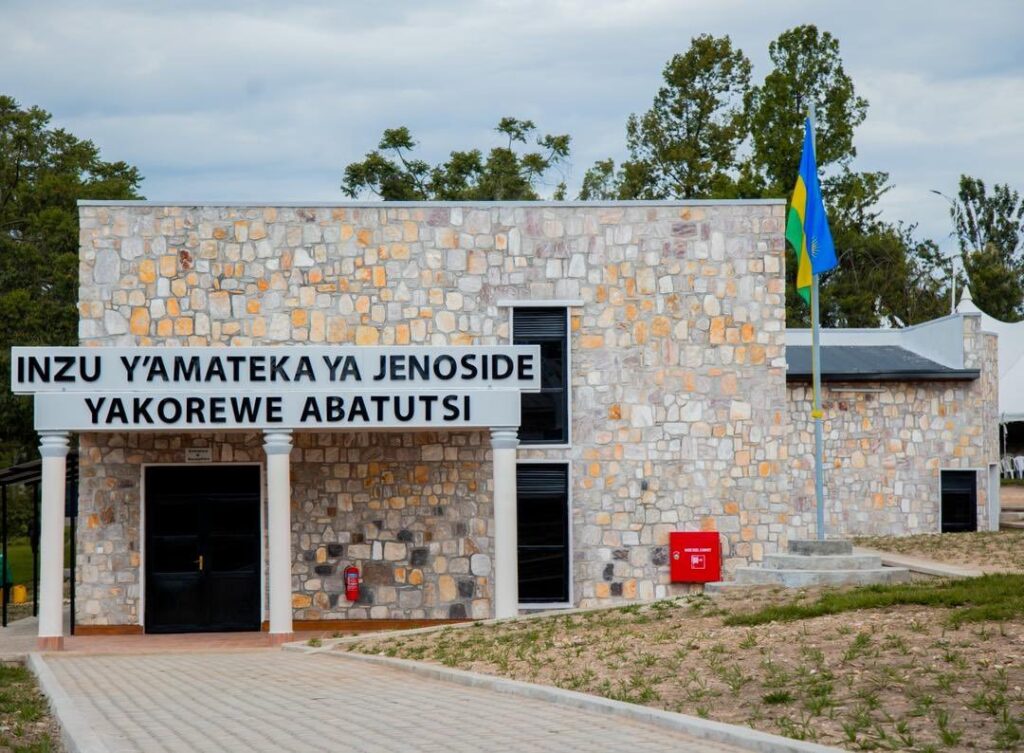
Survivors of the 1994 Genocide against the Tutsi in former Ntongwe Commune have welcomed the construction of a new genocide memorial house in Ruhango District, describing it as a powerful symbol of memory and resilience.
The facility, built following years of advocacy by the Amayaga Genocide Survivors Foundation (AGSF), stands out for its unique use of stones that survivors say carry deep historical significance.
AGSF president Evode Munyurangabo expressed appreciation to the Government of Rwanda for responding to their request and delivering what he described as a meaningful and well-designed structure.
He noted that the stones used in the construction were sourced from areas where Tutsi had sought refuge during the genocide, using them in desperate attempts to defend themselves before being overpowered.
“These stones represent a bond with our loved ones,” he said, underscoring their symbolic value.
The memorial house documents Rwanda’s history across several phases, including pre-colonial and colonial periods, the First and Second Republics, the planning and execution of the genocide, as well as rescue efforts and the liberation struggle. It also features sections dedicated to unity and resilience.
A dedicated space known as the “dark room” will preserve the memory of key perpetrators involved in killings in the Mayaga region, serving as an educational tool for future generations.
Ruhango District Mayor Valens Habarurema called on residents to contribute artifacts and materials that can enrich the memorial’s historical content, noting ongoing efforts to further develop the site.
The memorial is located at Kinazi, where more than 63,000 victims of the genocide are buried. On Sunday, an additional 35 bodies were laid to rest in a dignified ceremony at the site.