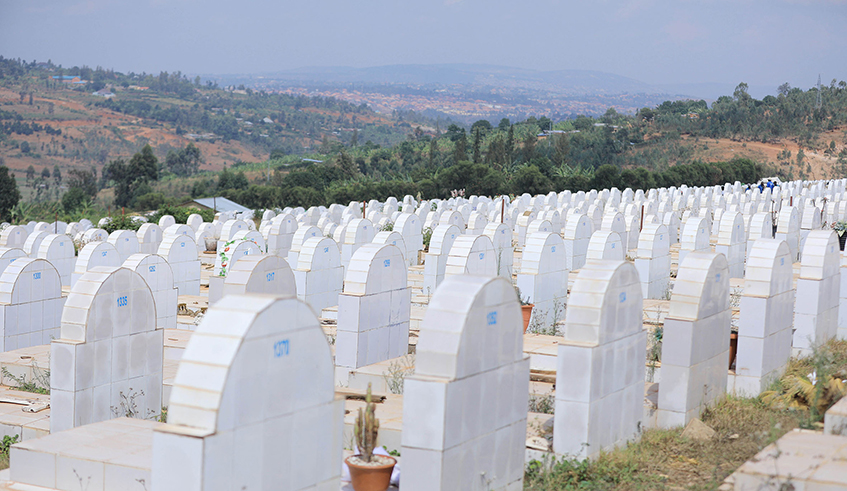
Rwanda continues to face significant challenges in fully capturing death records in its civil registration system, despite steady improvements in recent years, according to the latest report from the National Institute of Statistics of Rwanda (National Institute of Statistics of Rwanda).
The 2025 Rwanda Vital Statistics Report indicates that 39,355 deaths were recorded nationwide. However, only 50.5% of these deaths were officially registered in the civil registry, leaving nearly half of all deaths unrecorded.
Although this marks an improvement from 46.1% in 2024, the increase of 4.4 percentage points is still considered insufficient to meet national and global targets.
Under the Sustainable Development Goals (SDGs), Rwanda aims to achieve at least 80% death registration coverage by 2030, a benchmark that requires accelerated awareness and system efficiency.
The report highlights that most gaps occur when deaths happen outside health facilities. In 2025, 55.9% of all deaths occurred outside hospitals, making documentation and official reporting more difficult for families.
In urban areas, 58.6% of deaths occurred outside health facilities, compared to 38.7% in rural areas, where a higher proportion of deaths (61.3%) still occurred in health facilities.
Officials and analysts say the persistent underreporting is linked to limited public awareness, administrative barriers, and cultural perceptions that once burial takes place, formal registration is no longer necessary.
The report contrasts this with strong performance in birth registration, which has reached near-universal levels in Rwanda.
A total of 356,838 births were recorded in 2025, with 99.1% registered within 30 days of birth. Only 3,323 cases were registered late, reflecting strong compliance in the civil registration system.
Birth registration coverage has remained consistently high, rising from 90% in 2023 to 90.3% in 2024, according to previous NISR data.
The report also highlights demographic patterns in births, showing that 24.2% of children were born to mothers aged 20–24, followed by 23.9% among those aged 25–29, and 19.8% among women aged 30–34.
While birth registration progress is widely regarded as a success in Rwanda’s civil documentation system, experts warn that weak death registration undermines the completeness of national population statistics.
The National Institute of Statistics of Rwanda emphasizes that accurate vital statistics are critical for planning health services, social protection programs, and national development policies.
Authorities are calling for stronger coordination between health facilities, local government structures, and communities to close the registration gap and ensure that every death is officially recorded.