Rwanda’s Senate has raised questions about the accuracy of official figures on electricity access, after finding that some households counted as having electricity are using solar systems that no longer work.
The concerns were raised by the Senate Committee on Finance and Economic Affairs during an assessment of the government’s progress in expanding electricity access across the country.
Senators said residents in several parts of Rwanda reported that their solar systems had stopped working, leaving some households without electricity. This prompted the committee to question whether official statistics fully reflect the number of households currently receiving a reliable electricity supply.
Officials told the committee that 86.6% of the population is considered to have electricity access when households with both functioning and non-functioning solar systems are included. Once households with faulty systems are excluded, the figure drops to 74.4%.
The committee said the gap between the two figures raises concerns about the reliability of data used to measure the country’s progress in expanding electricity access.
According to Rwanda Energy Group (REG), more than 700,000 households have received solar power systems since the government began expanding off-grid electricity solutions.
The Office of the Auditor General also raised concerns in its 2024/2025 report, noting that more than 9,000 people appeared twice among the beneficiaries of solar subsidies provided between July 2021 and June 2025.
The Auditor General said such discrepancies undermine the reliability of reported figures and could expose public funds to losses.
Felix Gakuba, Director General in charge of electricity distribution projects at REG, said the agency is working with solar system suppliers to address the problems.
“We are working with the companies that supply the solar systems, since the government provides subsidies to enable people to access them. We also involve our staff to help resolve problems faced by residents,” Gakuba said.
He urged households with faulty systems to report them through local authorities so REG can follow up with the companies responsible for repairing the equipment.
The government provides subsidies for solar systems of 20 watts and above to eligible households in areas not yet connected to the national electricity grid.
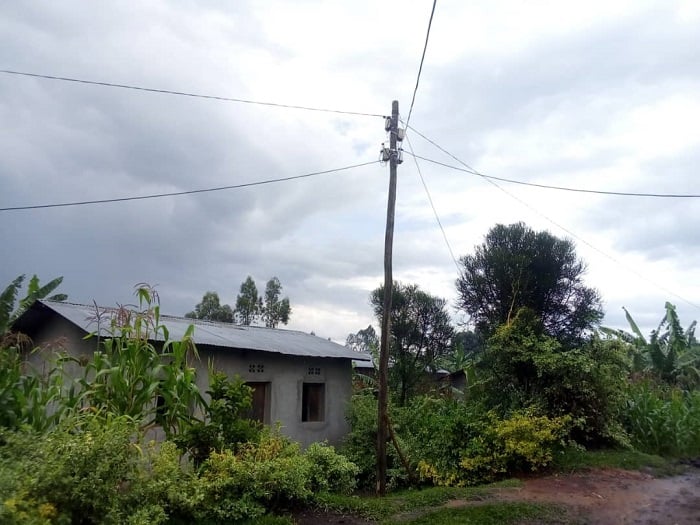
Rwanda still has 15 administrative cells without electricity, including some where infrastructure such as electricity poles was installed several years ago but households have yet to be connected.
Ministry of Infrastructure figures show that 88.3% of Rwanda’s population has access to electricity. About 63.3% are connected to the national grid, while 25% rely on solar systems.
The government aims to achieve universal electricity access by 2030, with solar energy expected to remain an important part of the expansion strategy.