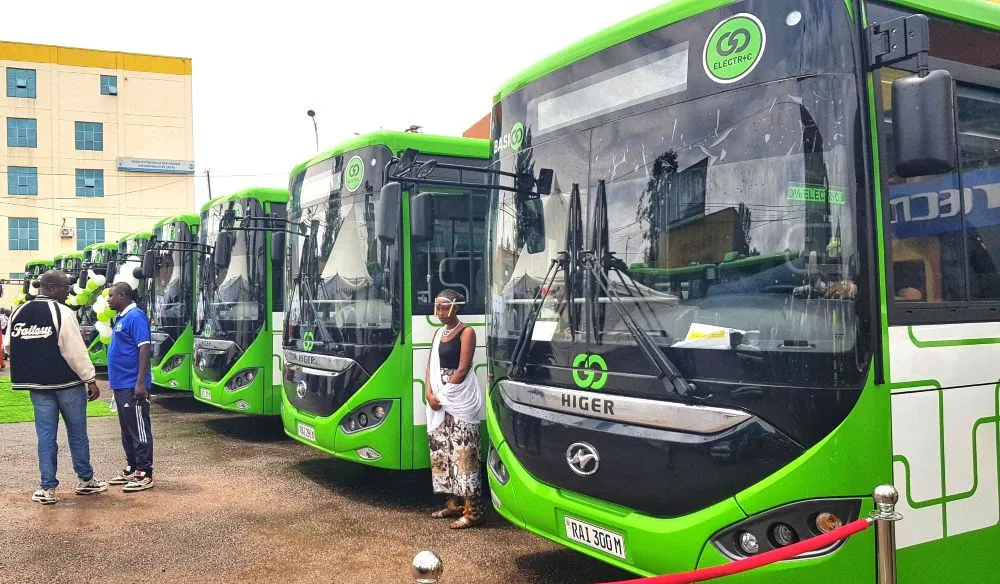
Rwanda will add 100 electric buses to its public transport fleet before the end of 2026 as part of efforts to improve urban mobility, reduce transport costs, and mitigate the impact of rising fuel prices, Prime Minister Justin Nsengiyumva has said.
The announcement was made during a press briefing on June 6, where the Prime Minister highlighted progress in the government’s drive to strengthen public transportation and encourage more people to use mass transit services.
According to Dr. Nsengiyumva, the number of commuters using public transport has increased by 15 percent, a development he described as a positive sign that government interventions are beginning to deliver results.
“A 15 percent increase in the number of people using public transport is something to celebrate,” he said.
The Prime Minister noted that while the government is investing heavily in public transportation, citizens remain free to choose their preferred mode of travel. He explained that the measures being implemented are designed to provide affordable and reliable alternatives, particularly as global fuel prices continue to put pressure on household budgets.
“The Government of Rwanda is fully aware that rising fuel prices are increasing the burden on citizens. We understand that meeting everyday needs is becoming more difficult for many households, which is why we are doing everything possible to lessen the impact of these challenges,” he said.
Dr. Nsengiyumva said the expansion of Rwanda’s electric bus fleet is part of a broader strategy to modernize the country’s public transport system while reducing dependence on fossil fuels.
He revealed that 100 additional electric buses are expected to be operational before the end of this year, while another 300 are planned by the end of 2027.
“As you have heard, we have already ordered more electric buses, and we expect to put around 100 of them into service before the end of this year,” he said.
Despite the government’s efforts to promote public transport, the Prime Minister stressed that no citizen is compelled to use it.
“We do not force people to use public buses. Anyone who can afford fuel or other means of transport is free to use them. It is their right to choose,” he said.
To improve the efficiency of public transport services, Kigali has introduced dedicated bus lanes during peak hours, allowing buses to move more quickly as commuters travel to and from work.
The government says the continued expansion of electric buses and other public transport initiatives is aimed at making travel more affordable, easing traffic congestion, and shielding citizens from the effects of rising fuel costs while supporting Rwanda’s broader environmental and sustainability goals.