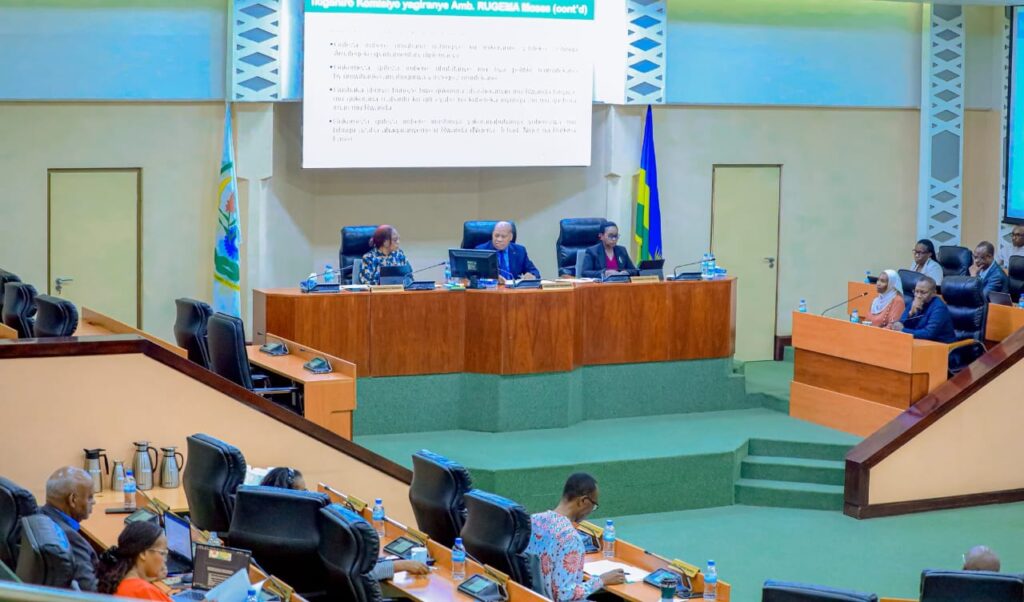
Rwanda’s Senate has called for improved coordination among government institutions responsible for licensing and monitoring industries following the closure of several alcohol-producing factories over regulatory violations.
The call was made on Monday during a discussion between senators and officials from the Ministry of Infrastructure and the Ministry of Trade and Industry on industrial park development and oversight of manufacturing activities.
Senators raised concerns over how some factories were able to obtain operating licences but later engaged in activities contrary to approved standards, with violations only being detected after years of operation.
Senator Uwizeyimana questioned the effectiveness of collaboration among regulatory bodies, saying delayed detection of non-compliance exposes gaps in supervision.
“How can a company be authorised to produce alcohol, but instead produce harmful substances, and this is only discovered after five or ten years?” he asked.
The concerns come after the government suspended several factories producing liqueur-type alcoholic beverages following findings that some were using substances, including ethanol, in ways that could pose risks to public health.
The senator questioned the working relationship between the Ministry of Trade and Industry and the Rwanda Food and Drugs Authority (Rwanda FDA), suggesting that stronger joint monitoring could have prevented the situation.
“It is clear that we have a serious challenge in coordinating our efforts,” he said.
Responding to the concerns, Minister of Trade and Industry Antoine Marie Kajangwe admitted that the situation was regrettable and showed weaknesses in regulatory follow-up.
“Reaching this stage is truly regrettable. What these manufacturers were doing appears to have constituted an offence. There was insufficient monitoring by those responsible for inspections,” he said.
However, the minister also stressed that manufacturers must take responsibility for complying with laws and safety requirements.
Kajangwe said relevant institutions will need to strengthen collaboration and improve inspection mechanisms to prevent activities that could endanger public health.
The debate followed Rwanda FDA’s announcement that it had closed 101 alcohol-producing factories and revoked their licences after inspections found they did not meet required standards.
Senators said stronger coordination between licensing authorities, quality control agencies, and industry regulators is needed to ensure that companies comply from the beginning and that violations are detected before they affect consumers.