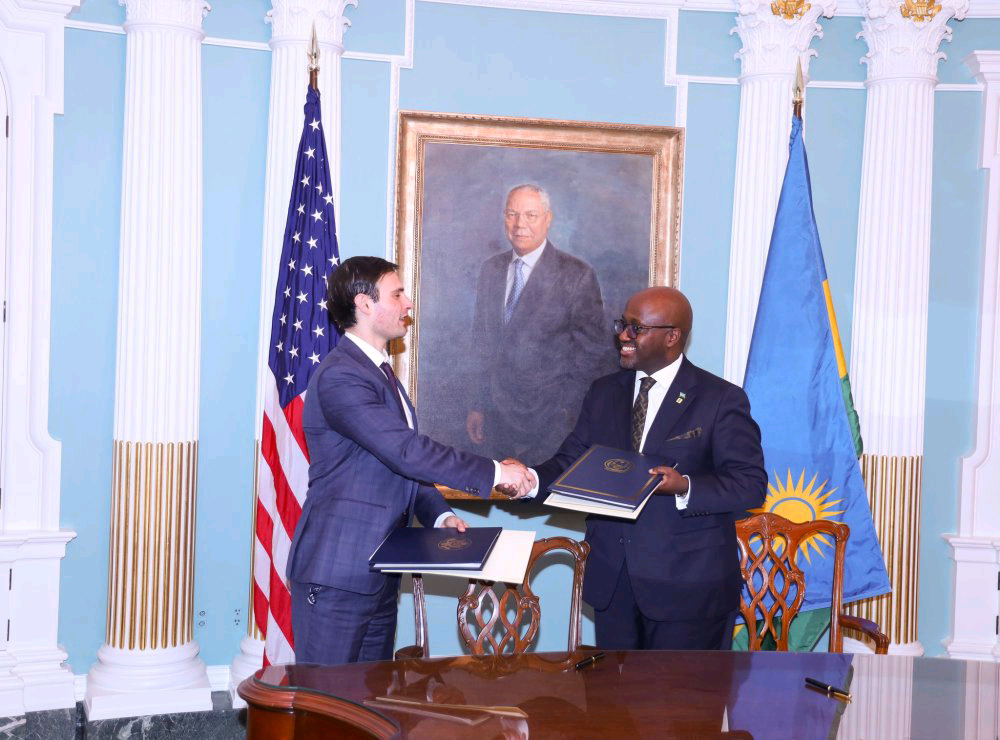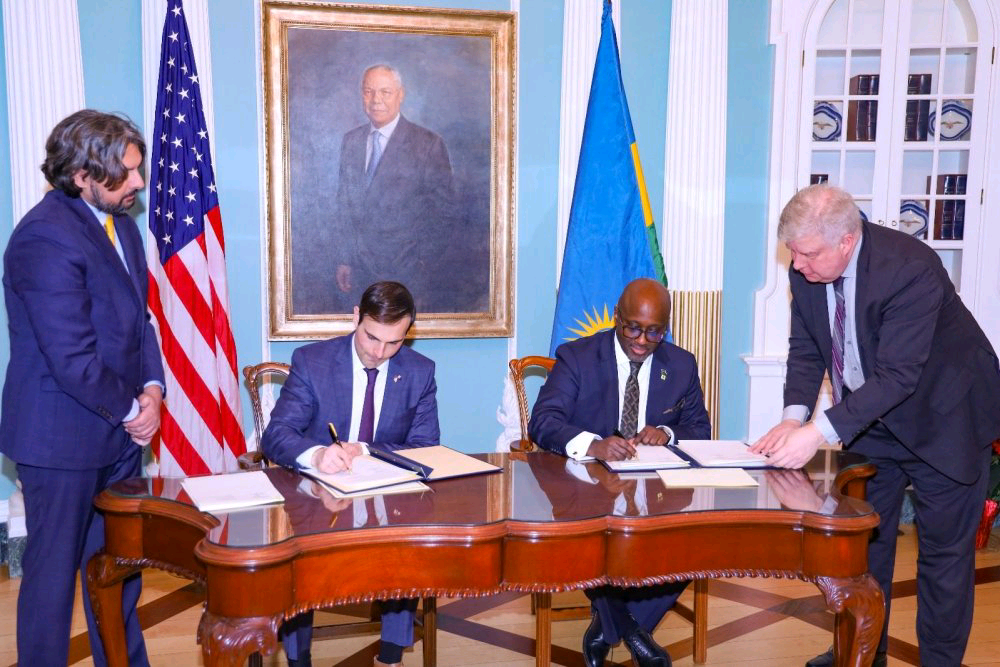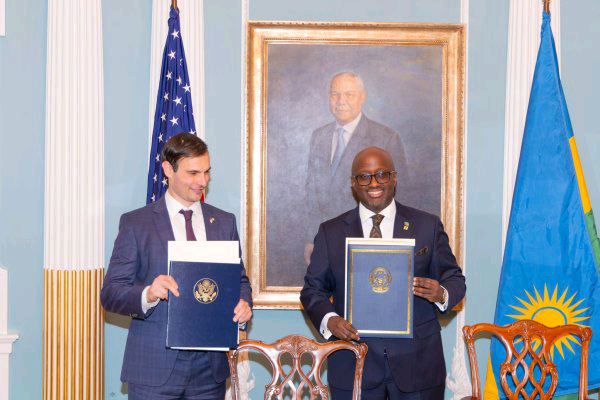
Rwanda and the United States have signed a major new cooperation agreement worth US$228 million to support Rwanda’s health sector over the next five years.
The deal, signed on December 5, 2025, in Washington, D.C., marks a renewed commitment by both countries to reinforce public health systems, expand disease surveillance, and sustain progress in the fight against HIV/AIDS and other infectious diseases.
Rwanda was represented by the Minister of Foreign Affairs and International Cooperation, Olivier Nduhungirehe, while the United States was represented by Jeremy Lewin, Deputy Administrator in charge of International Development, Humanitarian Assistance, and Religious Freedom.
Following the signing, the U.S. State Department praised Rwanda’s notable achievements in combating HIV/AIDS, highlighting the country as one of the few worldwide to meet the global 95-95-95 HIV targets. It said the new agreement is designed to build on those gains by strengthening national health systems rather than relying primarily on community-based, non-governmental service delivery models.
According to the U.S., the partnership will focus on expanding modern health infrastructure, training health professionals, and investing in reliable and sustainable health technologies. This support is expected to help Rwanda accelerate progress toward a resilient, high-performing, and trustworthy health system, with the goal of enabling the country to fully manage its HIV response by the fourth year of the program.
As part of the deal, and with support from the U.S. Congress, the United States plans to contribute US$158 million over five years. The funding will support Rwanda’s efforts to fight HIV/AIDS, malaria, and other infectious diseases; strengthen disease monitoring; and reinforce the country’s readiness to detect and respond quickly to emerging epidemics.
Rwanda will increase its own health sector investment by about US$70 million, a move aimed at building long-term sustainability as U.S. financial assistance gradually decreases in the coming years.
The agreement is also expected to advance American commercial and technological interests in Rwanda and the African region. It builds on U.S. funding provided in November 2025 to Zipline International Inc., the American drone-technology company whose systems are used for delivering medicines and emergency supplies.
Rwanda is the first African country to adopt Zipline technology, it will take responsibility for operating and maintaining the new U.S.-supported drone-based delivery network.
In addition, the partnership includes US$10 million to support Ginkgo Bioworks, a U.S. biotechnology firm, in expanding its disease surveillance operations in Rwanda. This investment will help establish a “biothreat radar” system aimed at detecting and managing potential disease outbreaks across the region.
The agreement further outlines opportunities for collaboration with U.S. private-sector companies in key health areas, including advanced HIV treatment development and the use of artificial intelligence in healthcare.
The U.S. State Department said the deal reaffirms the strong partnership between the two nations and underscores their shared commitment to safeguarding and advancing public health gains.