The Ministry of Local Government (MINALOC) has acknowledged that salaries for Cell-level leaders remain low but stressed that this should not prevent them from delivering quality services to citizens. Efforts are underway to review compensation and strengthen capacity at the grassroots level.
This statement came during discussions held on Wednesday, December 17, 2025, between Transparency International Rwanda, civil society organizations, and local government officials, focusing on the role of citizens in local governance and empowerment initiatives.
The discussions also highlighted the PPIMA project, aimed at bringing governance closer to citizens and promoting their active participation in policy implementation.
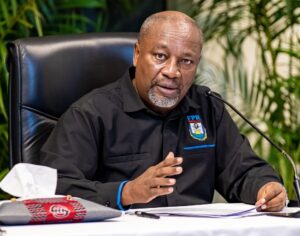
Richard Kubana, Director General of MINALOC in charge of civic engagement and volunteer youth, said the initiative to bring governance closer to citizens has produced positive results.
“Services have now reached the lowest administrative level—the Cell—so that no citizen is left behind. However, we are considering ways to further strengthen capacity at this level,” he said.
Kubana explained that Cells, being the administrative units closest to citizens, are critical in delivering services. He emphasized that the government encourages self-service policies under the national ‘BYIKORERE’ policy, allowing citizens to access services without necessarily visiting the Cell for everything.
Despite low salaries, MINALOC underscored that Cell leaders remain committed to their work.
“Low pay is visible to all of us—their salaries are small, but they are committed to working. Taking a job means committing to do it well. The level of pay should not determine service quality,” Kubana said.
He added that citizens should also cultivate appreciation for the services they receive while ensuring they do not overburden local leaders. The priority is for essential services to be accessible nearby.
Government review of salaries
In March 2023, during the graduation of newly trained Cell Leaders, President Paul Kagame promised that the government would review salaries, which were considered outdated relative to leaders’ responsibilities.
Aline Mutimukeye, a citizen from Rugendabari Sector in Muhanga District, highlighted the challenge, noting that provincial Cell leaders earn an average of 80,000 RWF, compared to 300,000 RWF for their counterparts in Kigali. She explained that the workload often requires leaders to maintain two households—their family home and the workspace—which makes low pay particularly challenging.
President Kagame responded that the issue requires careful study and a formal decision.
“I cannot give a full answer immediately, but this matter will be examined and addressed. Salaries in cities are about four times higher than those in rural cells. We need to find a way to align them, considering multiple factors,” he said.
The President also emphasized that increasing salaries and staff numbers should go hand in hand with measurable performance and outputs.
Citizen empowerment and participation
MINALOC notes that in the 31 years since Rwanda’s liberation, the government has established mechanisms to increase citizen participation. Over 80% of citizens now actively contribute to solving local problems and providing input on development initiatives, up from 65.63% in 2018.
Good governance and citizen empowerment initiatives are helping to foster self-reliance, civic responsibility, and patriotism. Local structures also encourage citizens to resolve family conflicts, improve agricultural productivity, enhance education and child development, assist vulnerable populations, and combat malnutrition.
Community infrastructure, including schools and health centers, has been developed through programs like Umuganda, ensuring that essential services are accessible at the local level.
While challenges remain, MINALOC and the government are committed to strengthening local governance, ensuring fair compensation for Cell leaders, and maintaining a citizen-centered approach to service delivery.