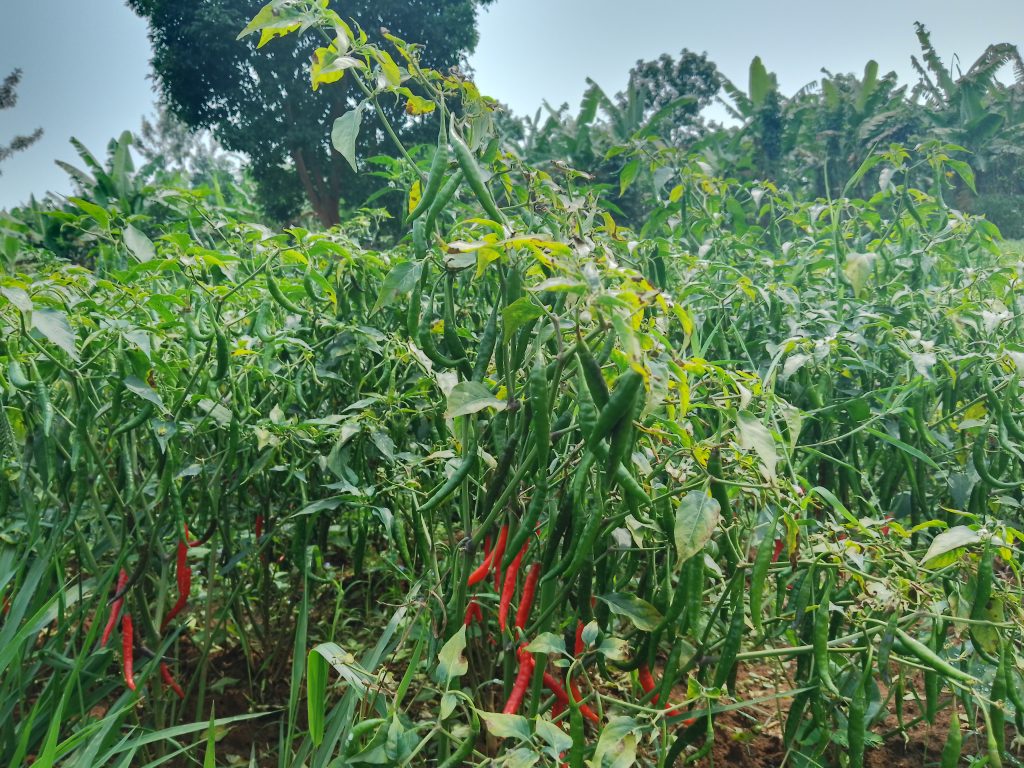
The National Agricultural Export Development Board (NAEB) has announced a set of urgent measures to tackle post-harvest losses affecting chili farmers, with a focus on improving drying systems and strengthening the value chain.
The intervention comes amid sustained complaints from farmers across key producing districts, including Bugesera and Nyagatare, where large volumes of chili have been lost due to reliance on traditional ground-drying methods. Farmers say the lack of modern infrastructure has led to spoilage, reduced quality and lower market prices.
NAEB officials say the response is anchored in a broader programme targeting post-harvest handling and value addition, aimed at safeguarding farmer incomes and enhancing export competitiveness.
Project manager Aimable Rusingizandekwe said the initiative is already working directly with farmer cooperatives to reduce losses and improve standards. More than 6,000 farmers grouped in six cooperatives are expected to benefit from capacity-building programmes, with about 75 percent already trained.
The training covers the entire production cycle, including good agricultural practices, harvesting, drying techniques and cooperative management, with emphasis placed on maintaining quality from farm to market.
Rusingizandekwe acknowledged that drying remains the weakest link in the chain, noting that specialised training will follow once new facilities are completed. He added that selected technicians are being sent to South Korea to acquire advanced skills in modern drying technologies for chili and onions.
To provide a long-term solution, NAEB is investing in modern drying infrastructure in major production zones, including Bugesera, Nyagatare, Rulindo, Rubavu and the City of Kigali. At the national level, processing plants equipped with machinery worth over Rwf 5 billion are under construction and are expected to be operational before the end of 2026.
Exporters say the upgrades will significantly improve both the quality and volume of chili destined for international markets, boosting foreign exchange earnings.
According to NAEB data, Rwanda exported more than 10,000 tonnes of chili between 2020 and 2025, generating over Rwf 42 billion. Post-harvest losses, currently estimated at 17.2 percent, are projected to drop to 8.7 percent once the new infrastructure becomes fully operational.