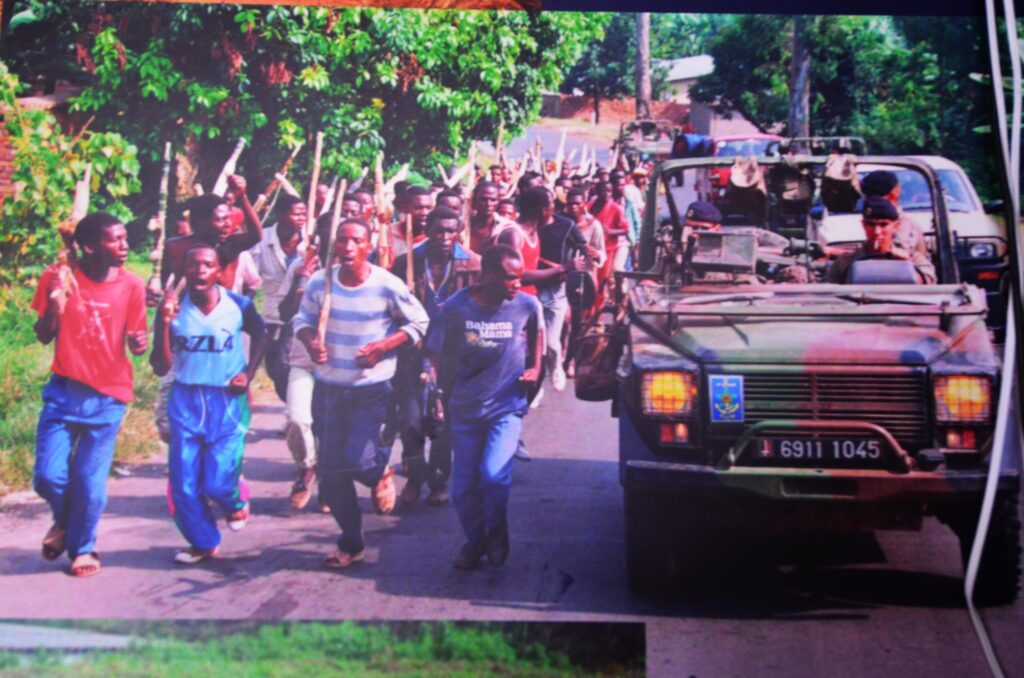
On April 8, 1994, just one day after the Rwandan Genocide against the Tutsi began, violence intensified nationwide. Every Tutsi became a target, hunted by soldiers, gendarmes, and Interahamwe militias determined to exterminate them.
On the same day, a so-called “rescue” government was installed, led by Sindikubwabo Théodore as President and Kambanda Jean as Prime Minister, aimed at accelerating the genocide. Mass killings soon erupted across the country, with Tutsi victims slaughtered indiscriminately.
Meanwhile, the Rwandan Patriotic Army (RPA) Inkotanyi continued its campaign to stop the killings. Maj. Gen. Paul Kagame, commander of the RPA, launched operations in Kigali and advanced into Byumba and Ruhengeri, vowing to halt the genocide.
French and Belgian forces evacuated Europeans and key officials through operations named “Opération Amaryllis” (France) and “Silver Back” (Belgium). Habyarimana’s family and major financiers of the genocide, including Félicien Kabuga, were also flown to Paris.
On this day, massacres occurred in Nyaruguru, Nyamirambo, Ruhuha, Cyambara, Mudende, Bweramana, Shyira Hospital, and other regions. Tutsi seeking refuge—whether in factories, parishes, schools, or orphanages—were systematically killed.
April 8 marked the expansion of the genocide, as the systematic targeting of Tutsi deepened across Rwanda, signaling the tragic scale of the atrocities to come.